Review: Steve Gordon Demo – Sunday 17th May, 2026
Threaded box
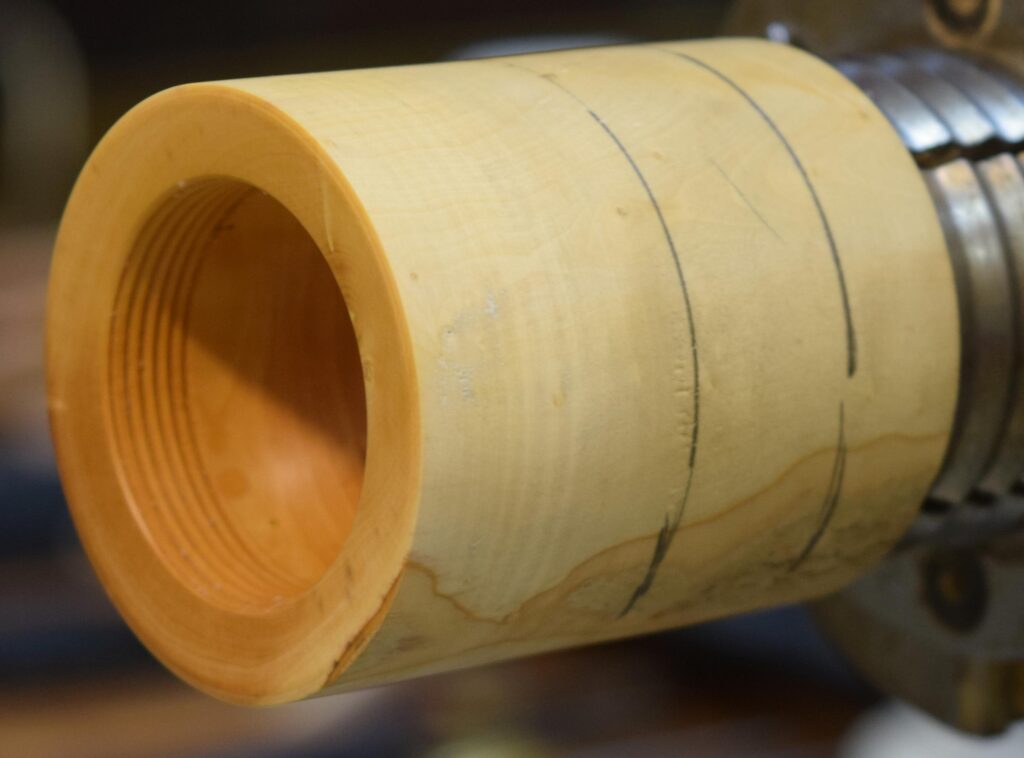
Start with the lid. Steve used a prepared box blank held in a chuck by a tenon. Hollow using a spindle gouge. Refine using a round negative rake scraper. We want a straight lip with an undercut/rebate. A straight walled box would need a proper recess.
Sand. Steve used sandpaper with a beeswax and mineral oil paste. To make: gently heat the oil (e.g. Chestnut food safe or unscented baby oil) to just warm, add beeswax pieces until melted and giving a milky colour. Pour into tins to cool. Should be a soft paste.
Cut the female thread at a low speed e.g. 370 rpm. Check for parallel threads using a rule.
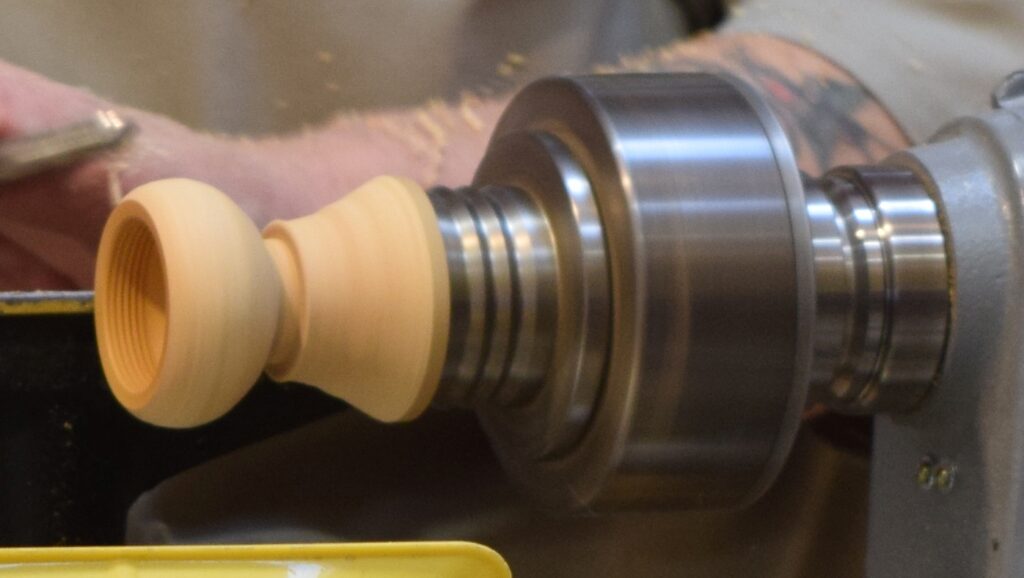
Shape the box using a spindle gouge. Sand. Part off.
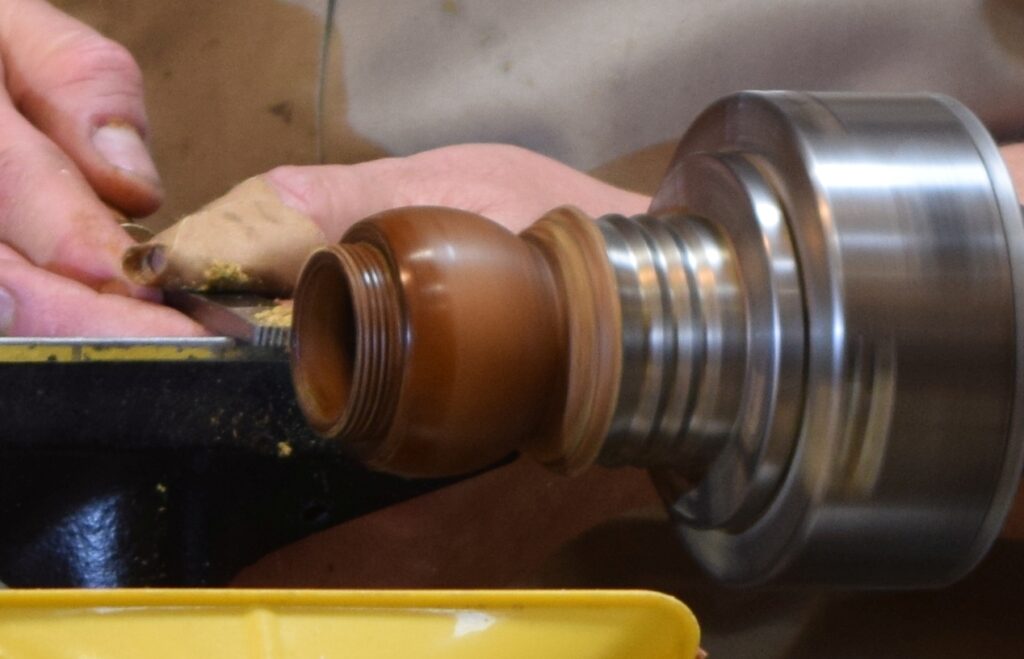
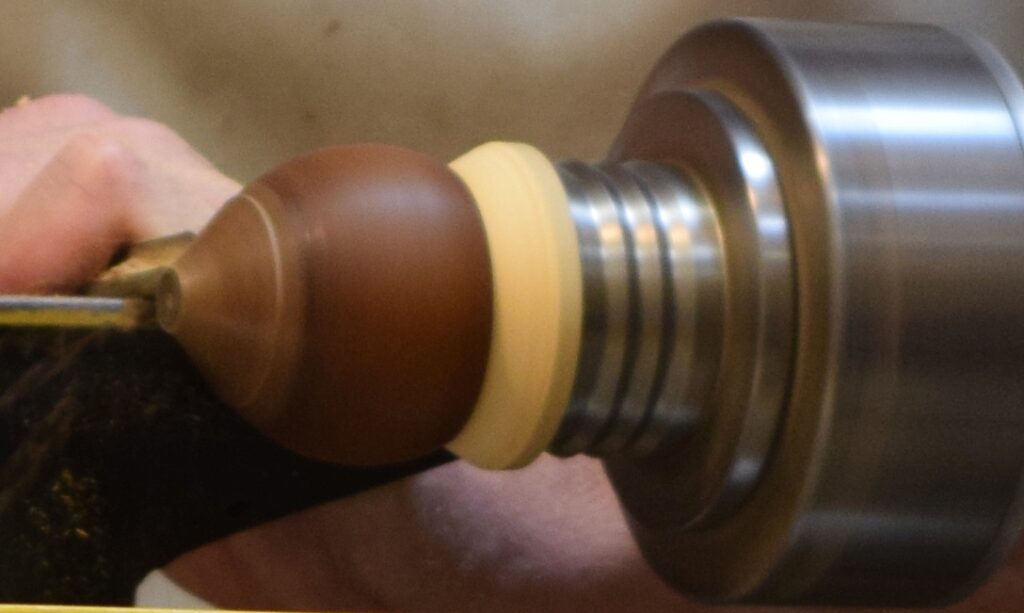
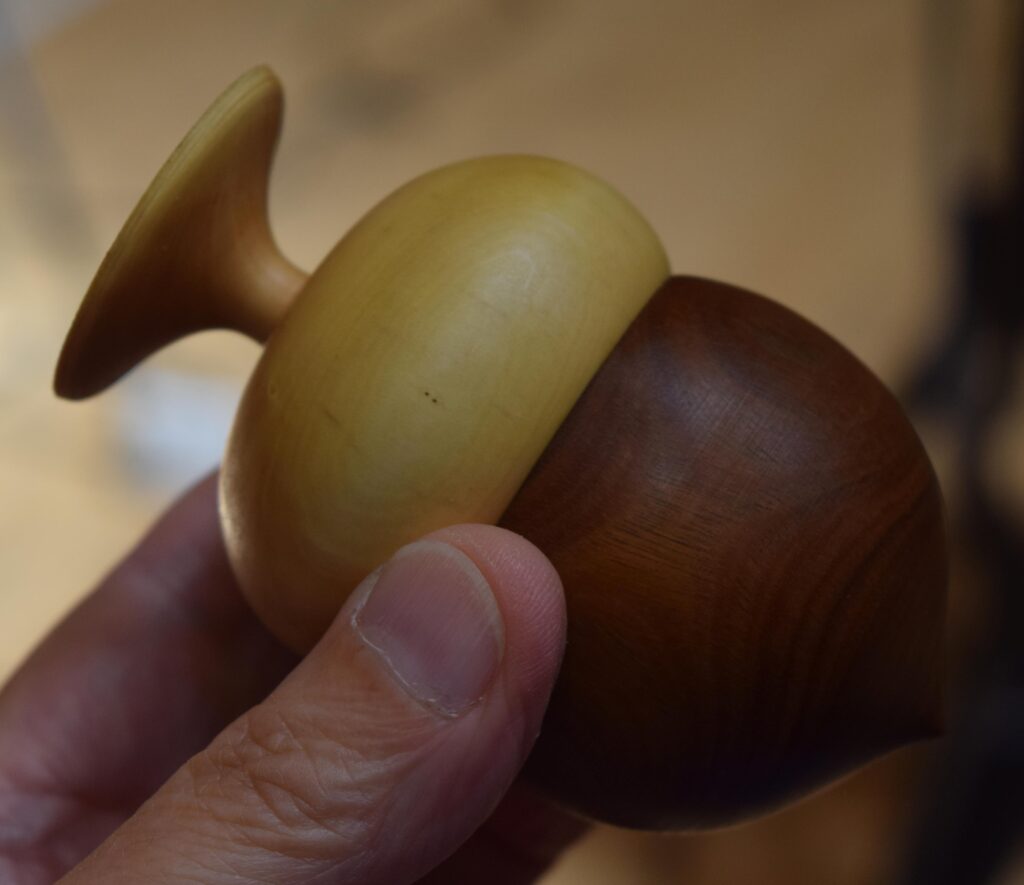
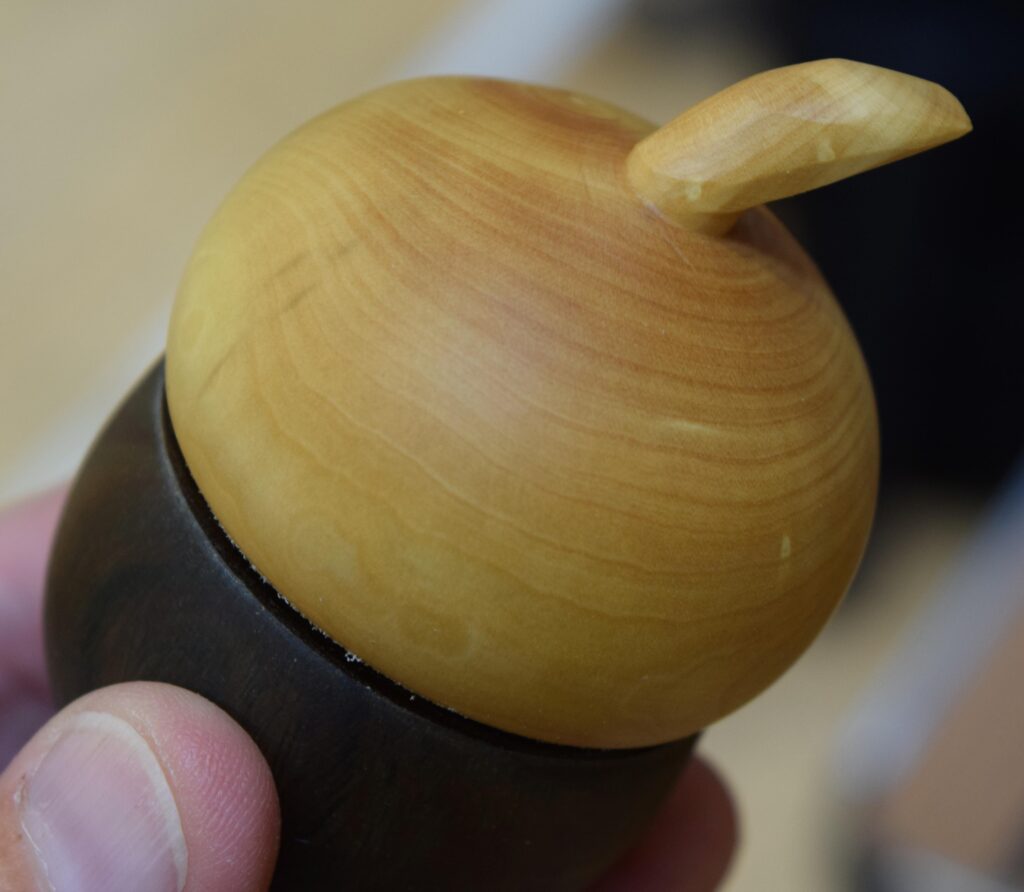
For the box itself, Steve used a prepared piece of lignum vitae, rounded and held in a chuck. Drill a hole to make hollowing easier. Create a short straight tenon to a diameter that just allows the threaded lid to fit over. Create a wider larger diameter tenon for the male thread. Hollow. Steve started with a spindle gouge and then moved onto the small hope hollower. Finish with a negative rake scraper to remove the bumps. Create the outer shape using a spindle gouge. Sand.
Cut the mail thread at about 350rpm. We want a loose fit, just like a nut on a bolt. Make a wood chuck with a matching female thread to hold the box. Finish the bottom of the box. Sand. Complete the finial using a sanding pad.
Bowl Techniques Demonstration
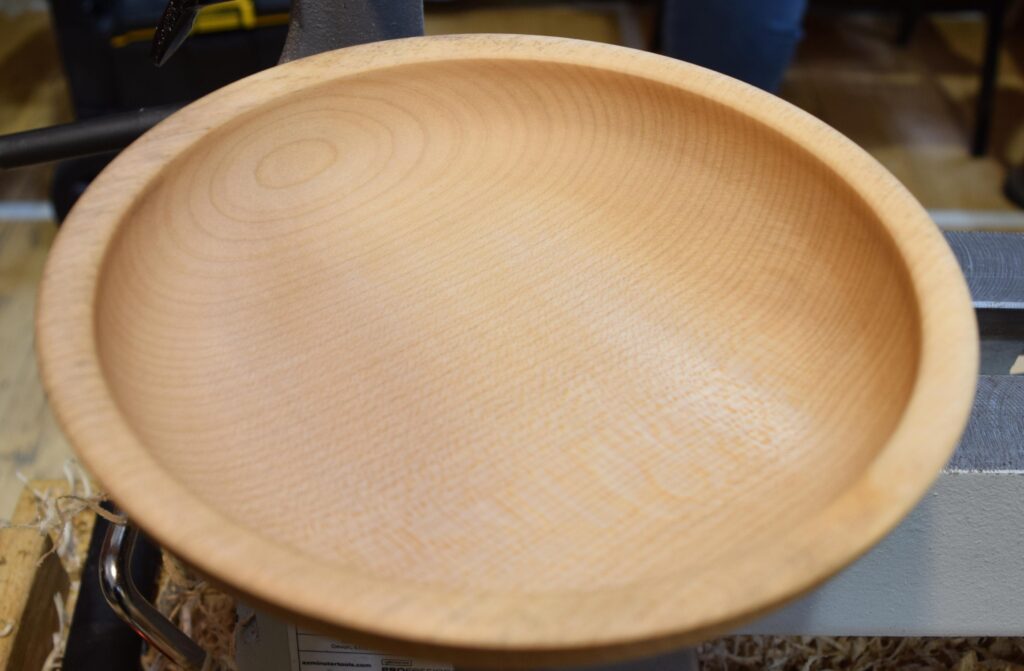
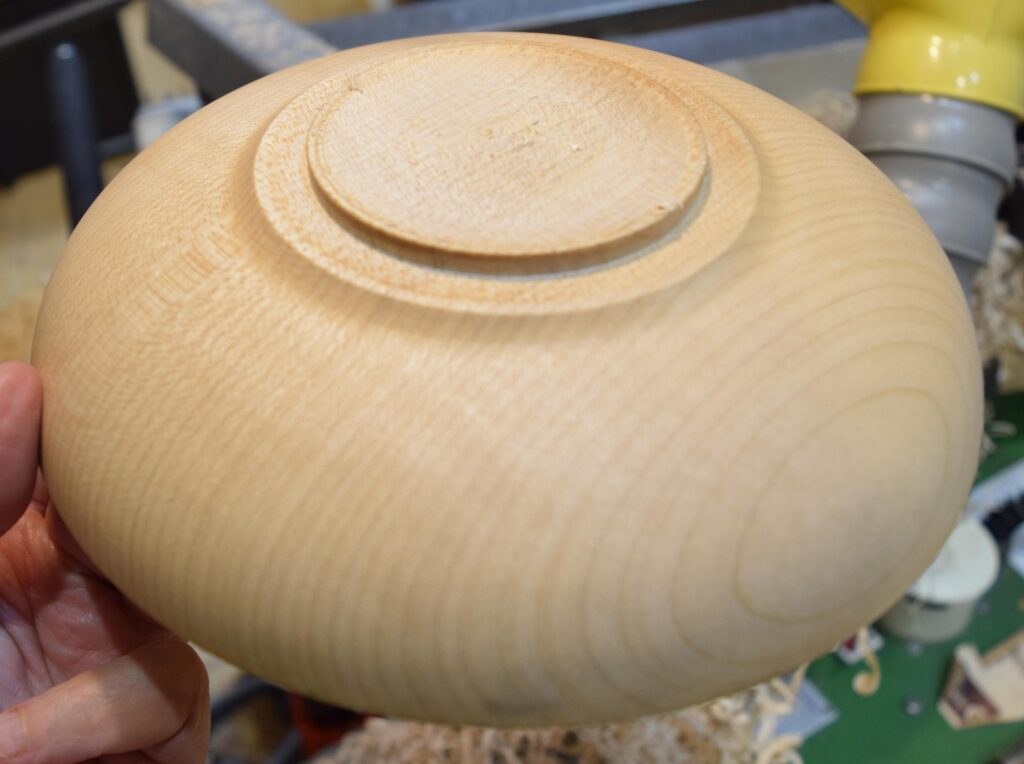
Steve demonstrated techniques for turning a bowl.
End-grain Vase from Green Wood
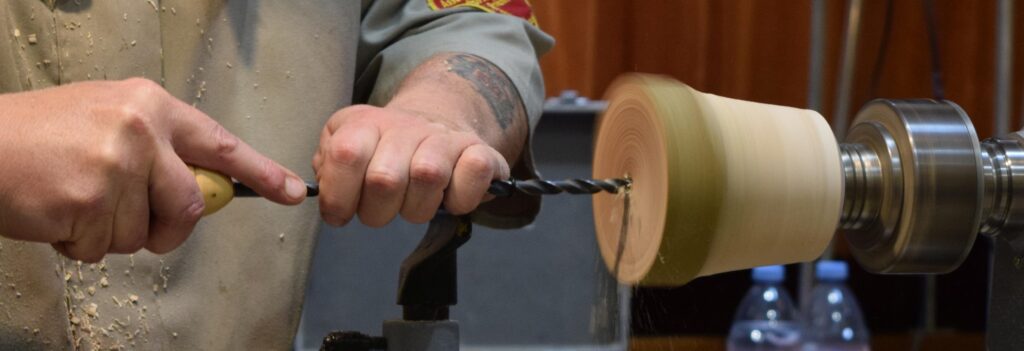
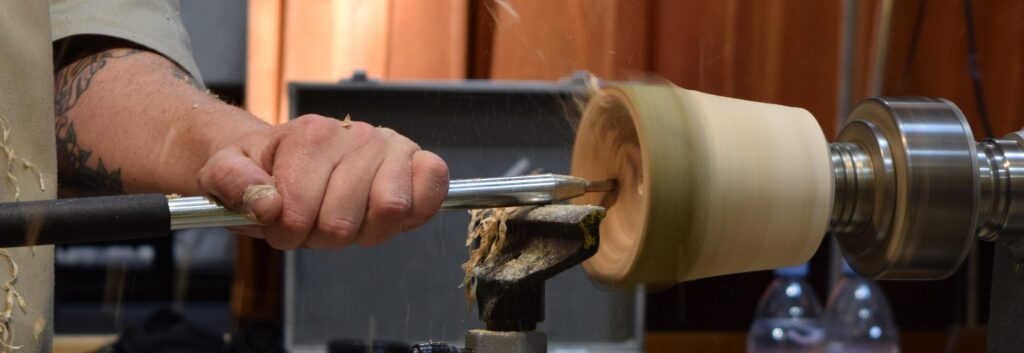
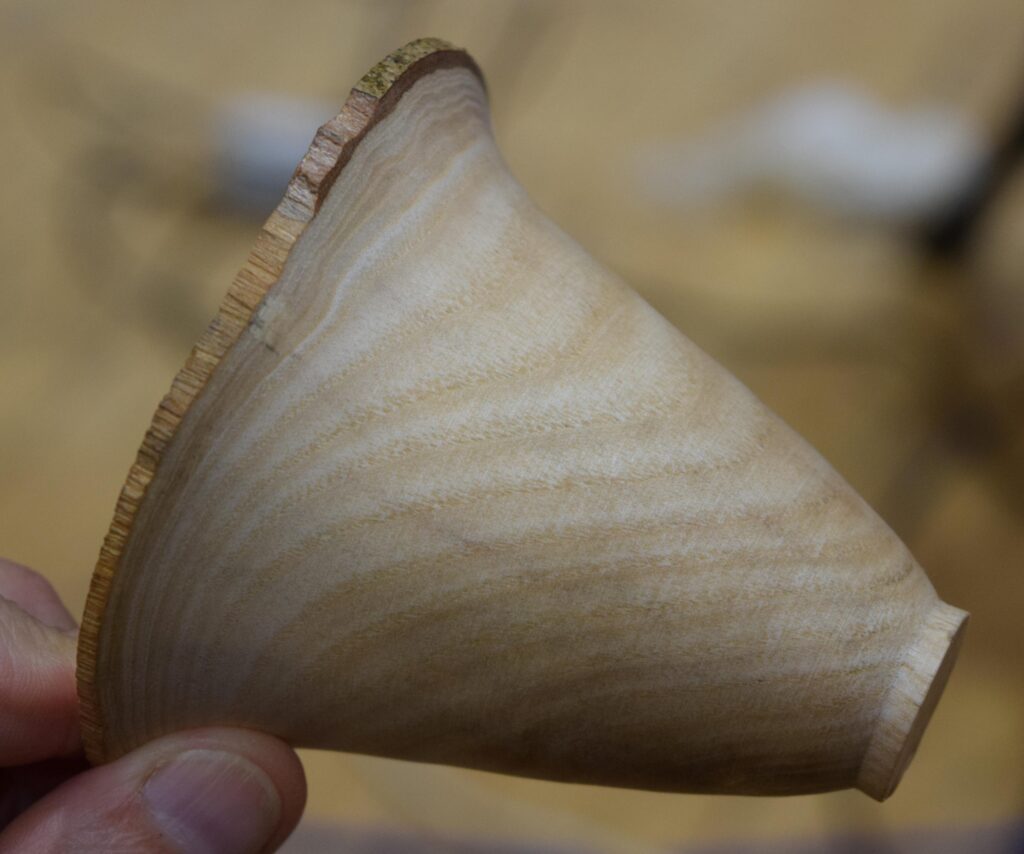
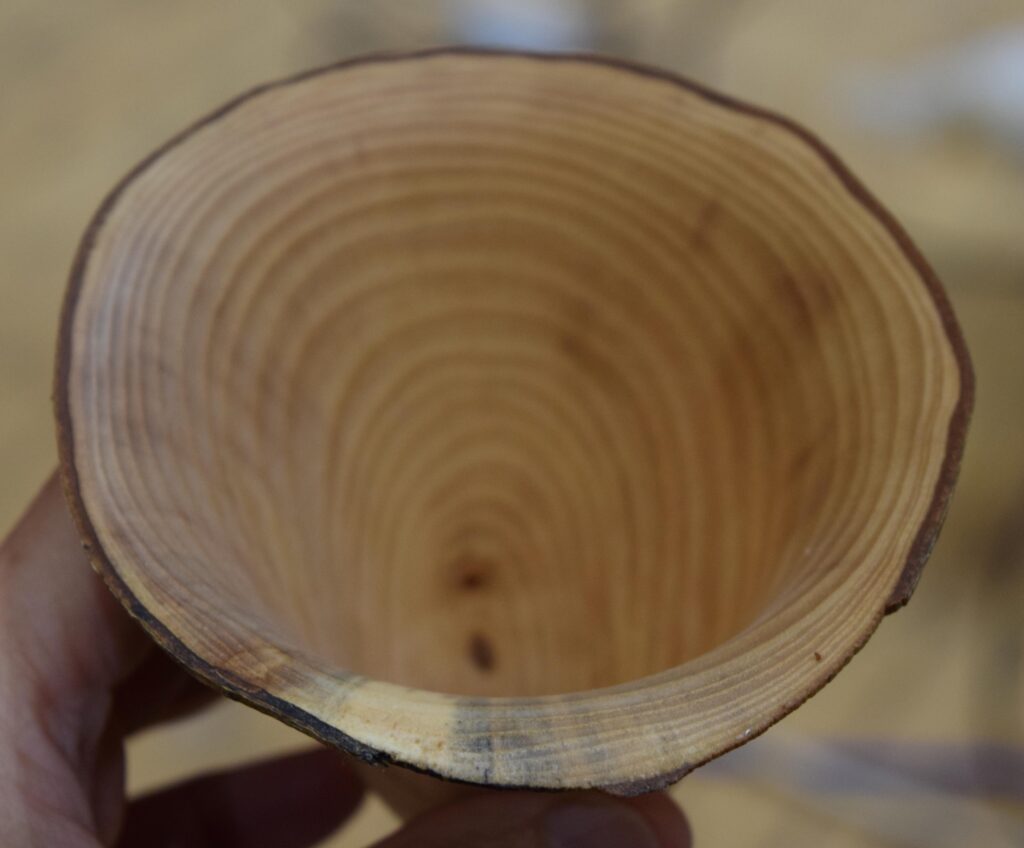
Steve used a wet sycamore log held between centres. Round part of the log with a spindle roughing gouge and create a dovetailed tenon. Mount in a chuck. Clean up the edge. Make a centre point for the drill. Drill a hole to the required depth.
Hollow out. Steve used a hope hollower. Steve shaped the vase from the inside to the outside. Use the hollower to refine the inside shape as much as possible.
To get a final refinement use a negative rake scraper for the main part and a regular scraper for the centre. Sand using a stick with Velcro to avoid cutting yourself on the live edge.
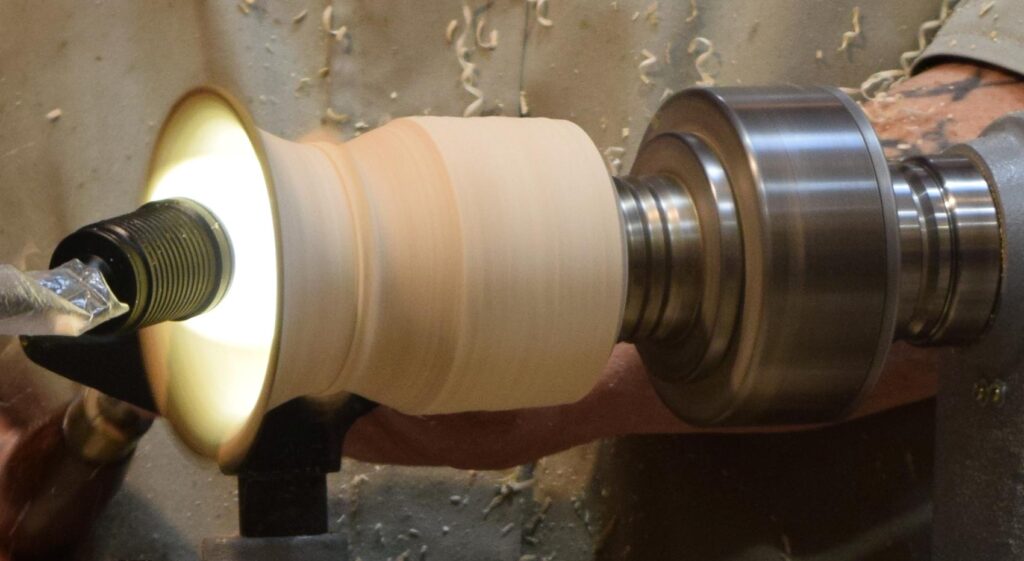
Put the light inside the vase. Shape the outside using a gouge. Cut to the thickness at which you just see the light coming the. Work your way from the live edge towards the vase bottom.
Check the depth and mark the position of the bottom. Complete the vase shape. Create a decorative base. Lightly sand.