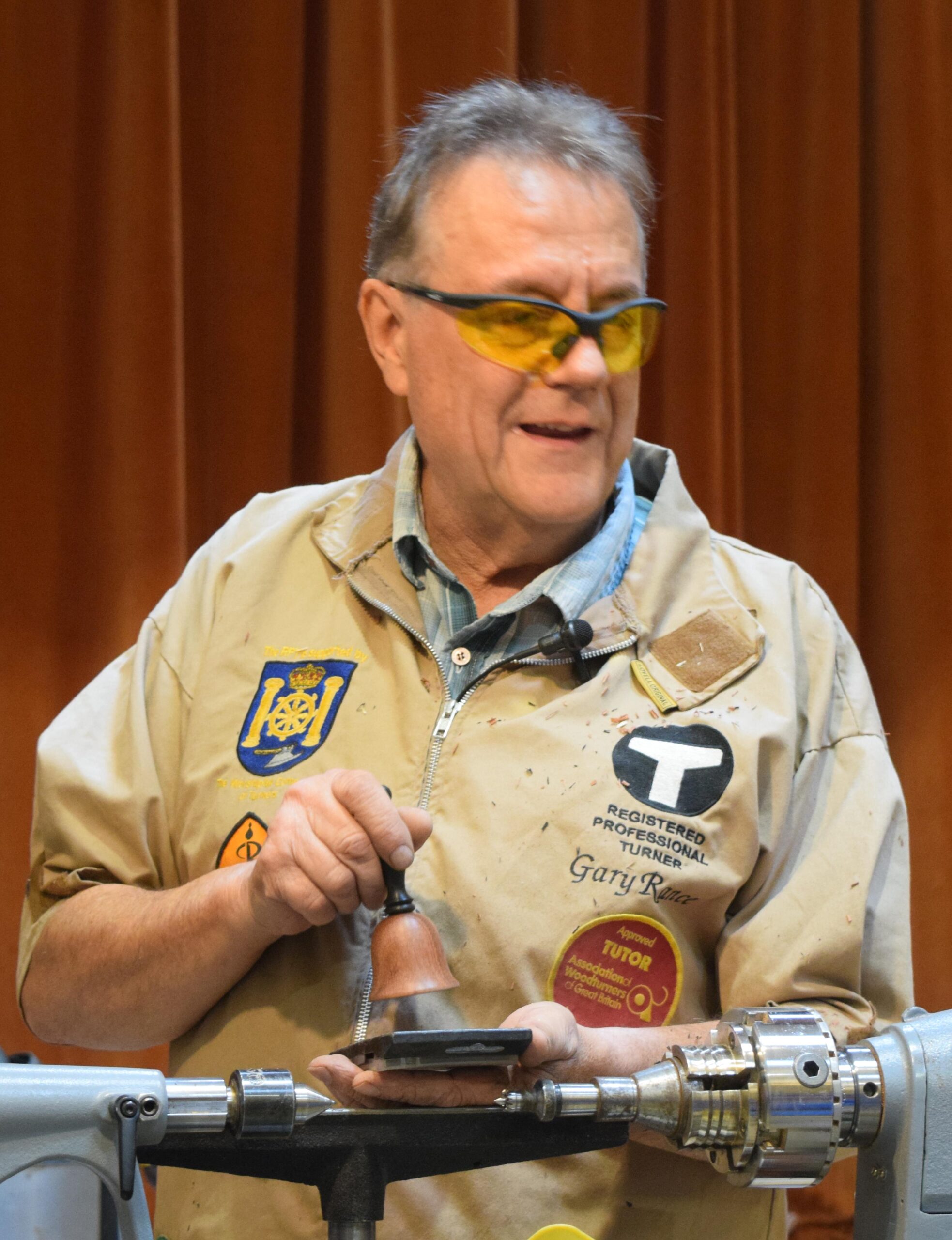
Review: Gary Rance Demo – Sunday 3rd August, 2025
Bell Salt Shaker
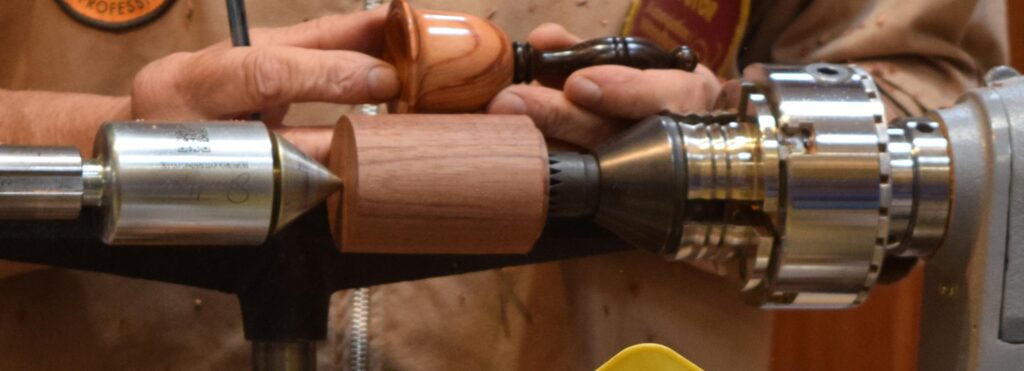
Gary used a 2.25”x3” bubinga spindle blank held between centres. Create a tenon on one side. Mark the bell height with a pencil. Reduce the diameter of the other end which will become the funnel insert.
Use a thin parting tool to make a witness mark where the funnel piece meets the bell piece. Shape the funnel. Mount in a chuck. Drill a 3mm hole all the way through the funnel. Part off.
Hollow the remaining base using a spindle gouge. It needs to be deep enough to accommodate the funnel plus 6mm.
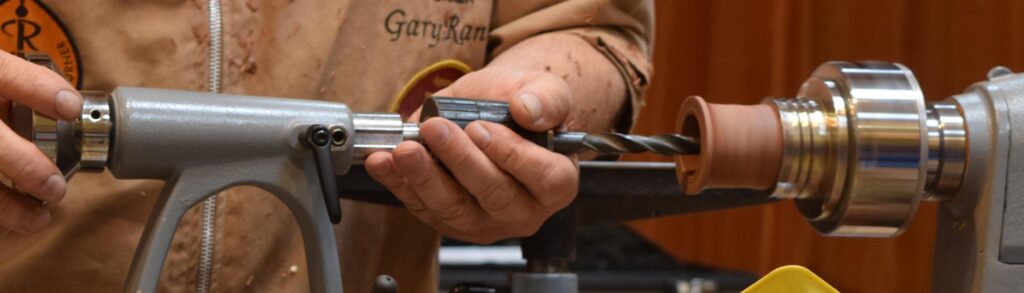
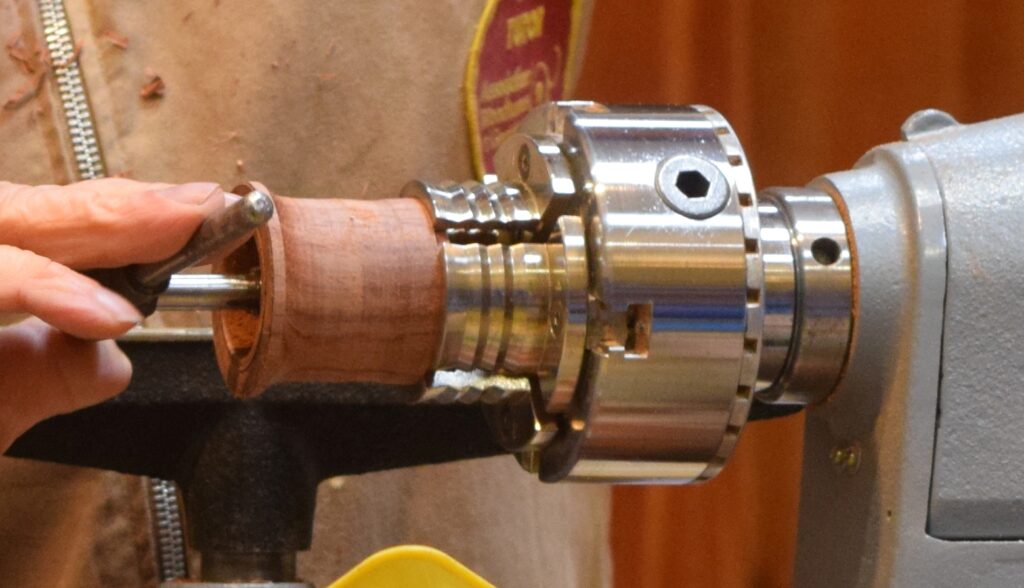
Now drill a 12mm hole for the handle to fit. Then thread tap the hole using a 12mm engineers tap (needs to go all the way through).
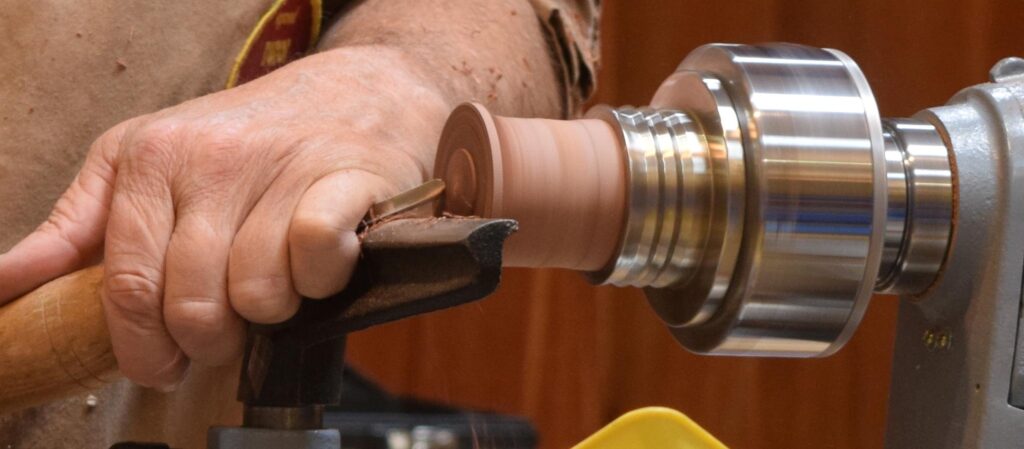
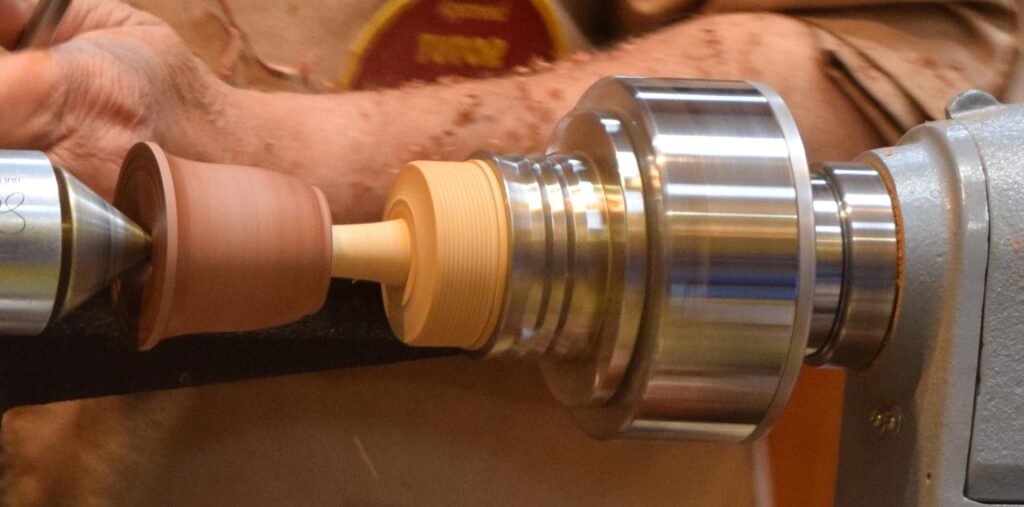
Now widen the opening using the witness mark as a guide. Test fit the funnel. Clean out any dust from the inside. Glue in the funnel using wood glue: be sure to align the grain!
Use a spindle gouge to clean up the base and to turn the centre inwards towards the hole. Add some feature marks to disguise the insert.
Make sure the hole is clear.
Hold the piece using a jam chuck and support using the tailstock. Shape the bell. Sand.
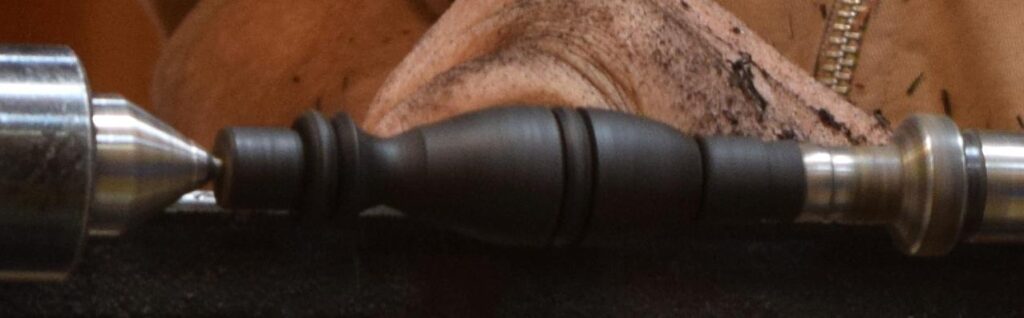
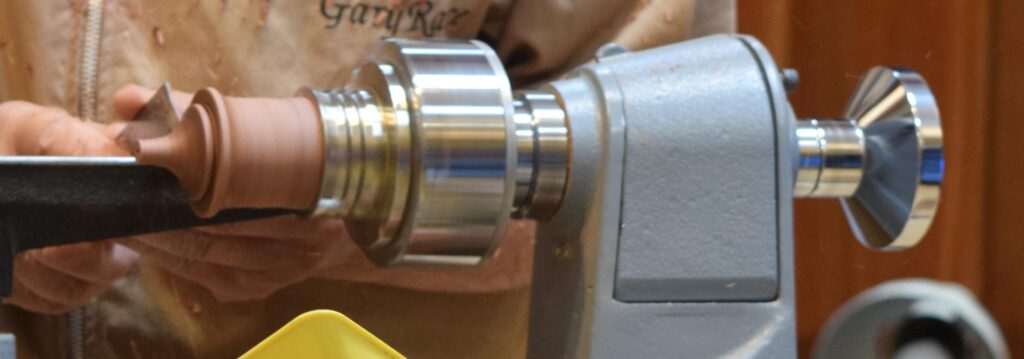
For the handle, Gary used a piece of ebony held between small centres. Round using a spindle roughing gouge. Transfer the key diameters to the piece using a pencil. Create a tenon the same, or slightly larger, diameter as the bell thread. Create a bead and bird’s beak feature.
Shape the rest of the handle. Chase a thread on the tenon at 375rpm. Gary used a 19tpi thread chaser to match the tap used.
Finish the handle shape with a ball at the end. Sand. Part off.
Gary finishes the shaker with sanding sealer and two coats of Chestnut lacquer. The piece is then buffed.
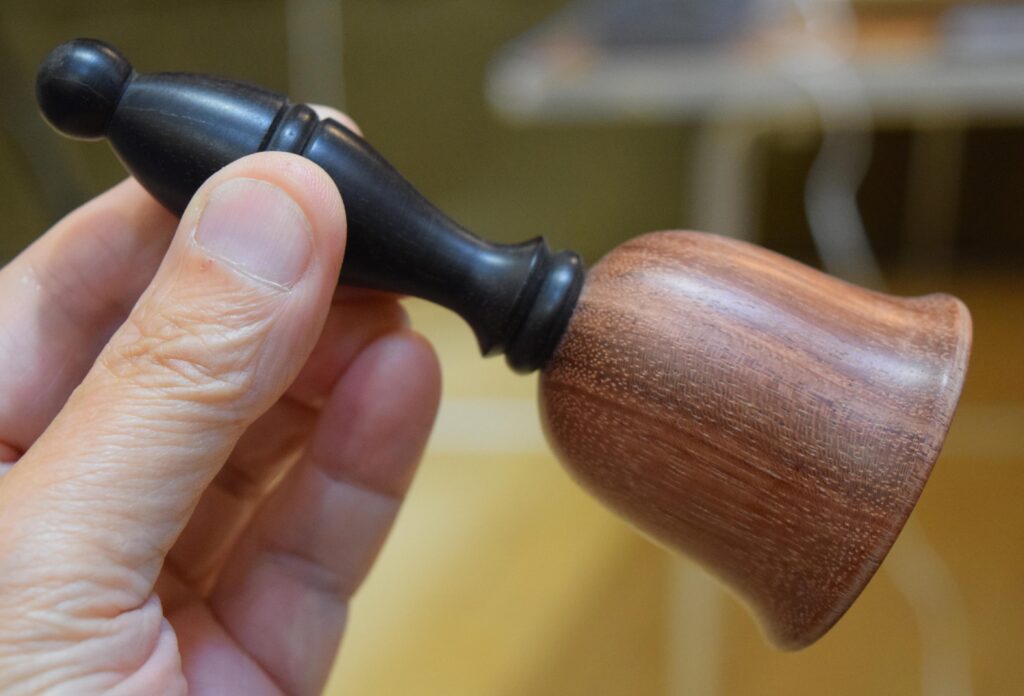
Christmas Decoration
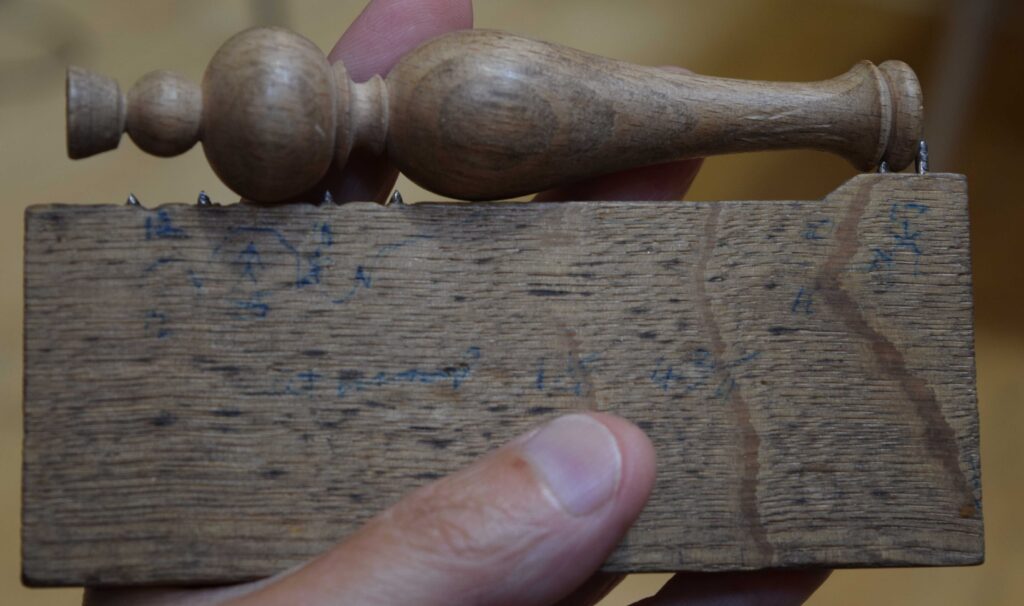
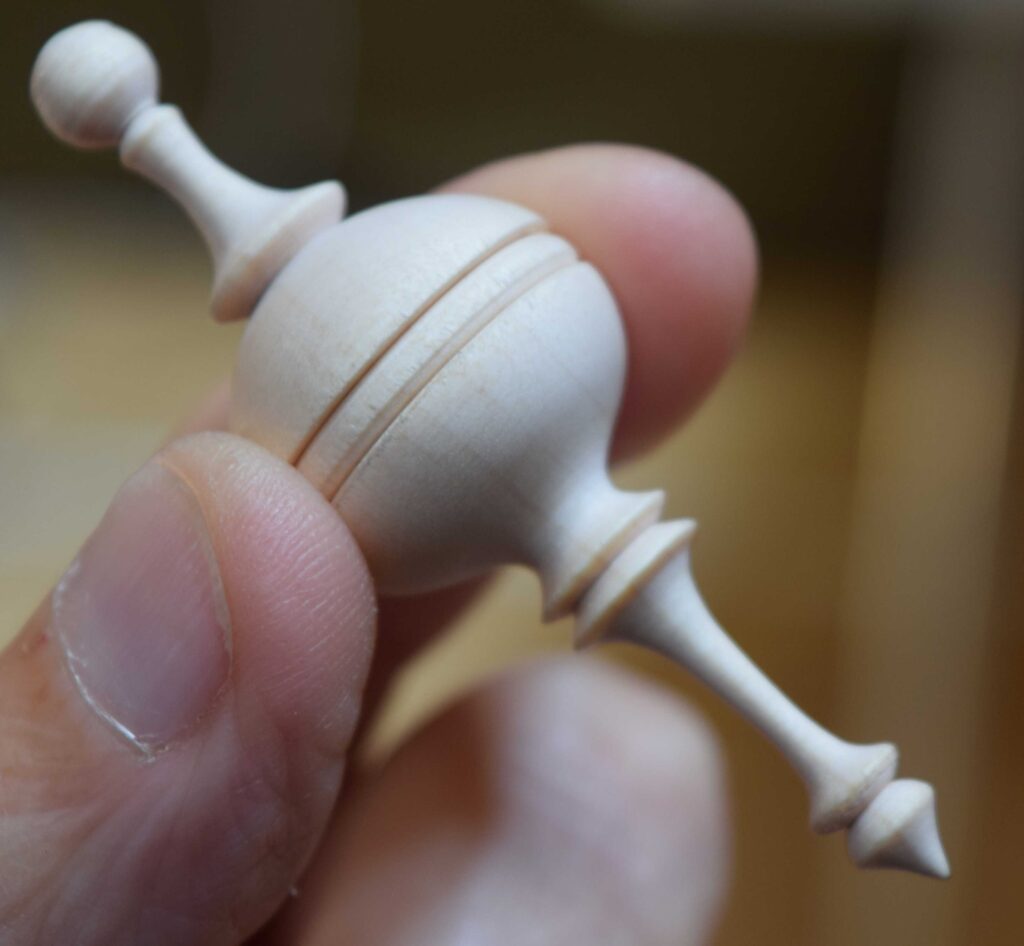
Use any wood you like, Gary used Sycamore held in a chuck. Make a template if you are going to make a few. The picture shows an example for a letter opener handle.
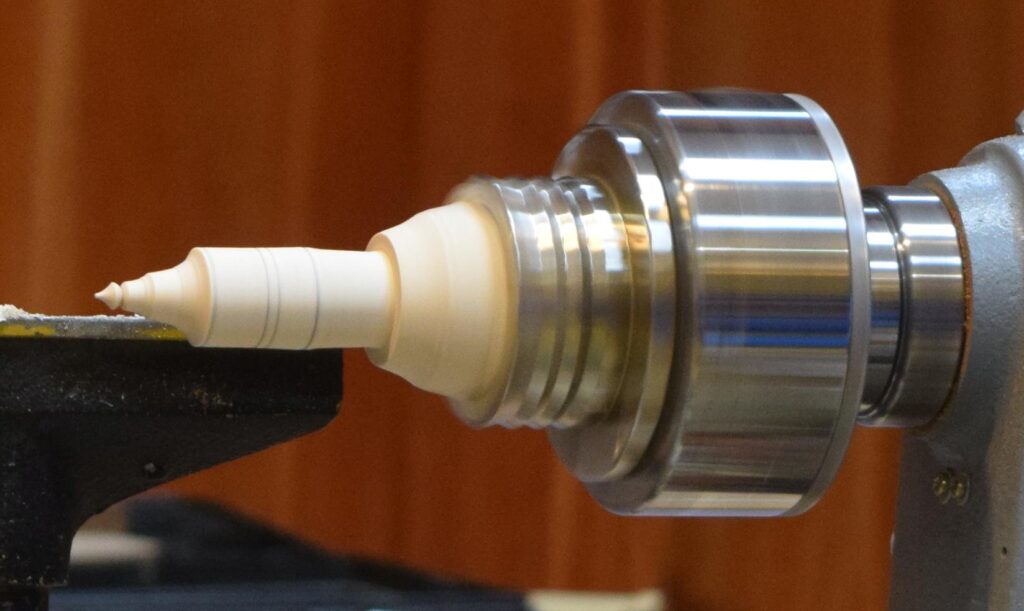
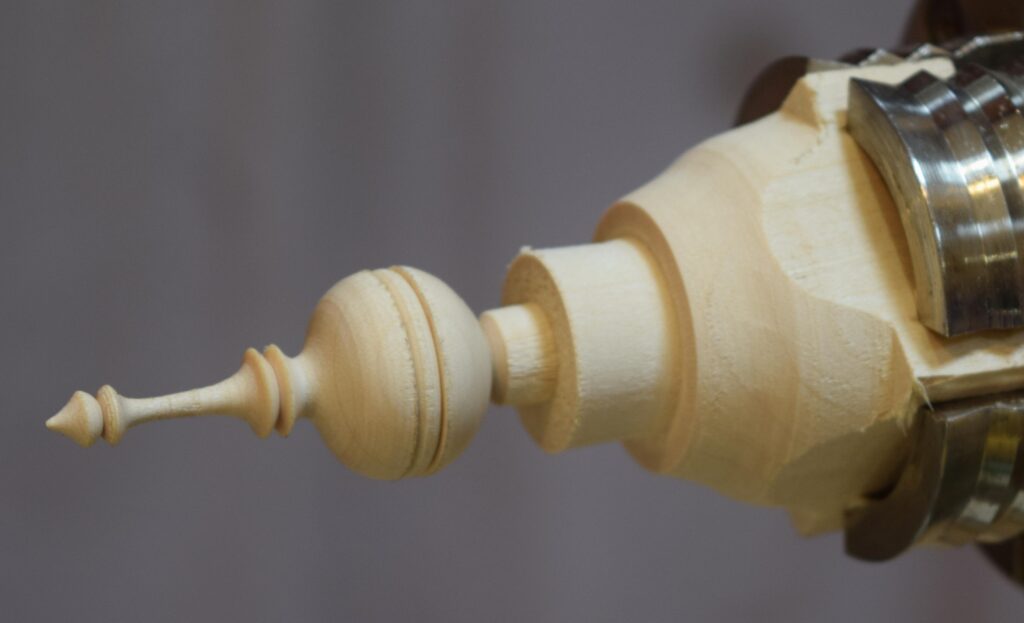
Round using a spindle roughing gouge. Remove waste material at the end. Turn a bird’s beak and a bead at the tip. Then a slightly larger pair of beads and then the main ball. Sand carefully what has been turned so far.
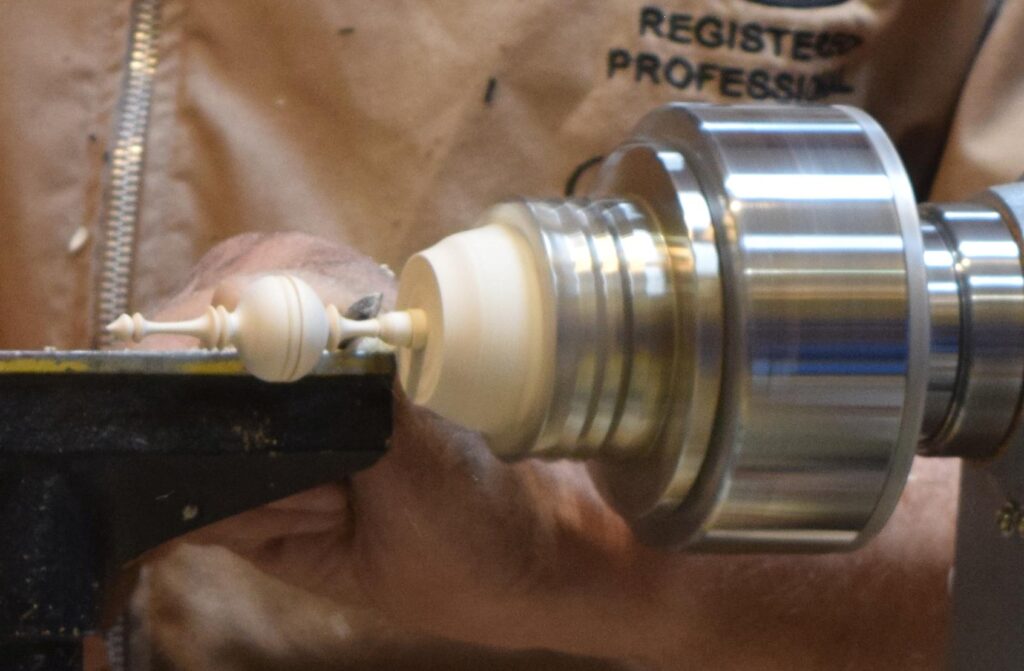
Finish turning the top of the decoration (nearest the head stock). Sand. Part off. Spray finish.
Apple
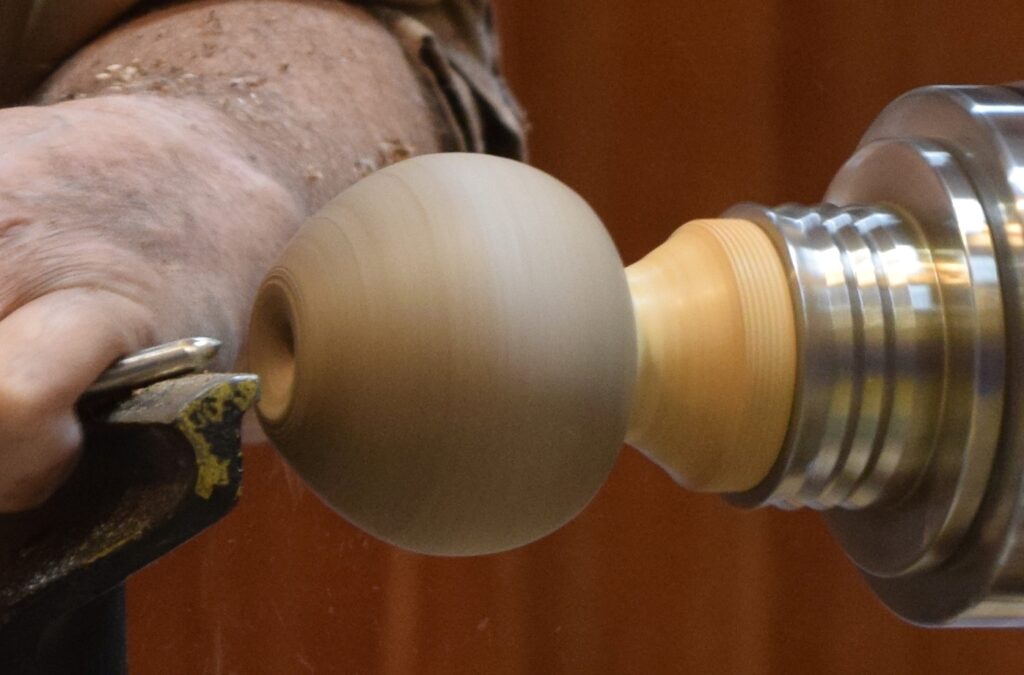
Gary uses 2 3/8” blocks. The piece is held on a homemade screw chuck. Round to 70mm. Shape the bottom of the apple leaving flat. Drill a small hole and shape the dimple using a spindle gouge. Sand.
Normally Gary would spray finish, but for the demo he used friction polish.
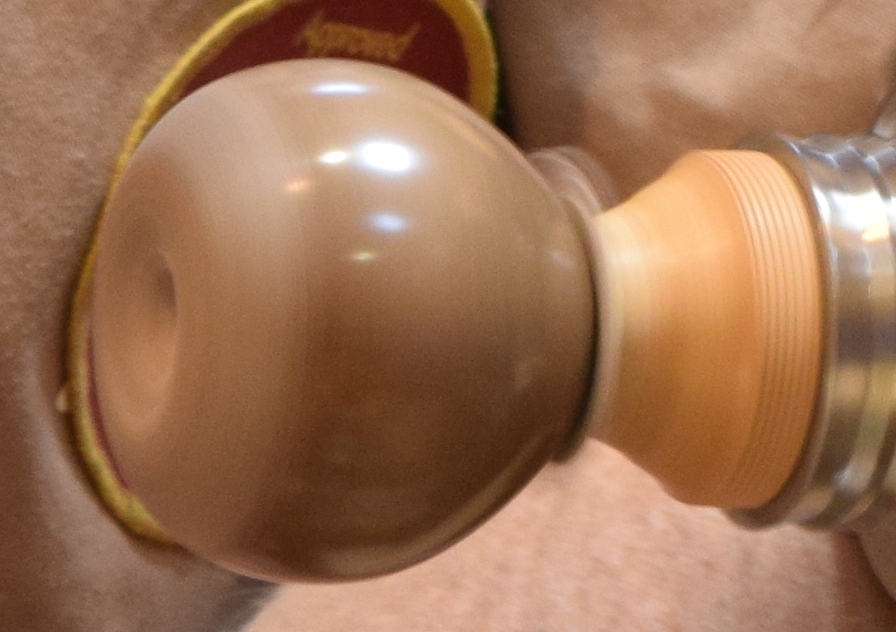
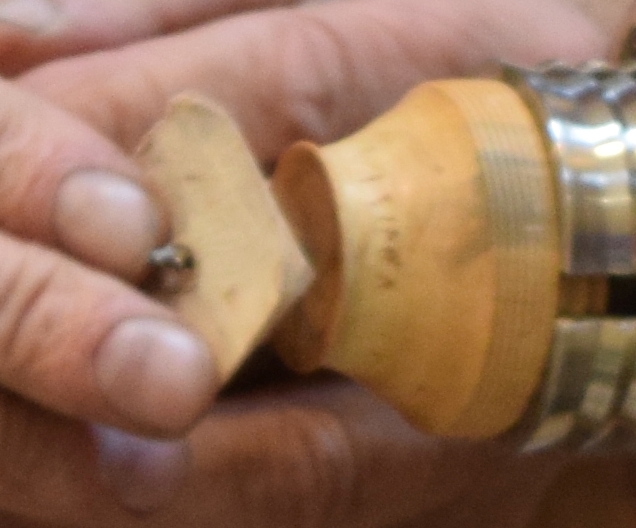
Reverse the apple in the screw chuck with a piece of card to protect it. Finish the top of the apple with a spindle gouge and sand. Apply finish.
Put a clove in the bottom and a small twig in the top, both held in by superglue.
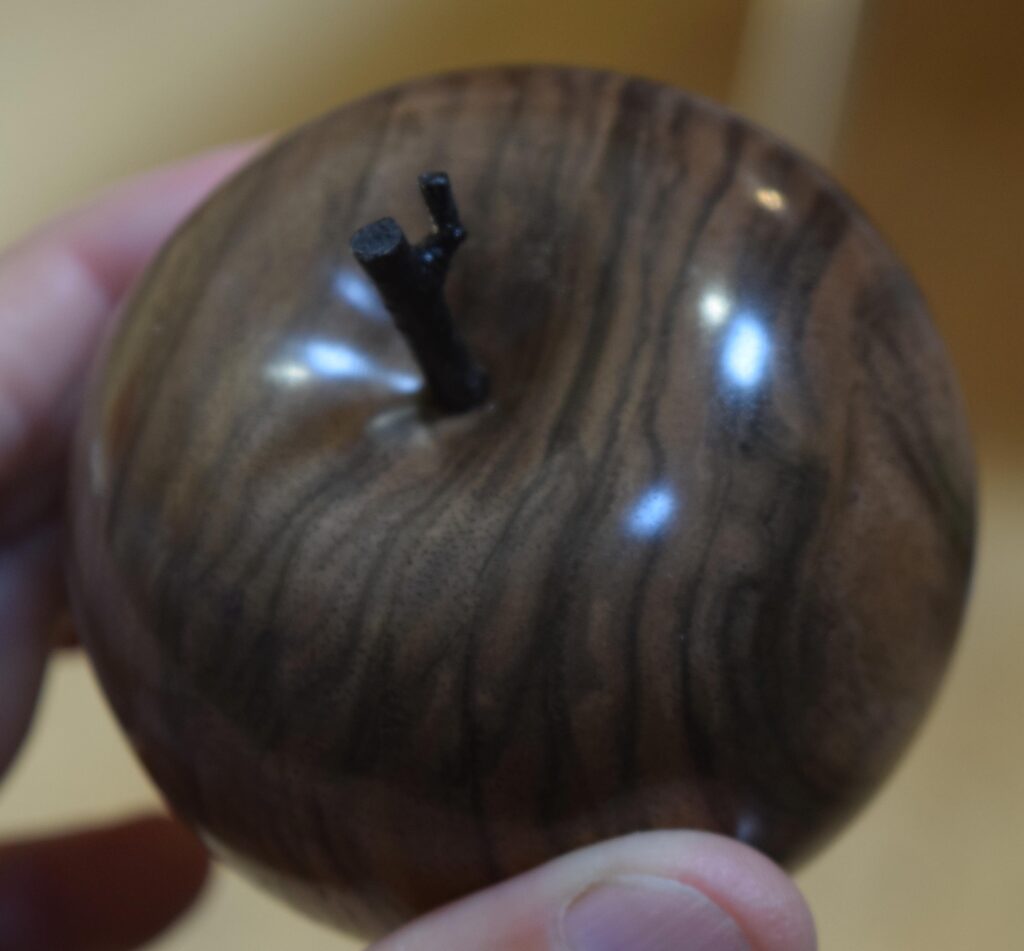
Pocket Watch Stand
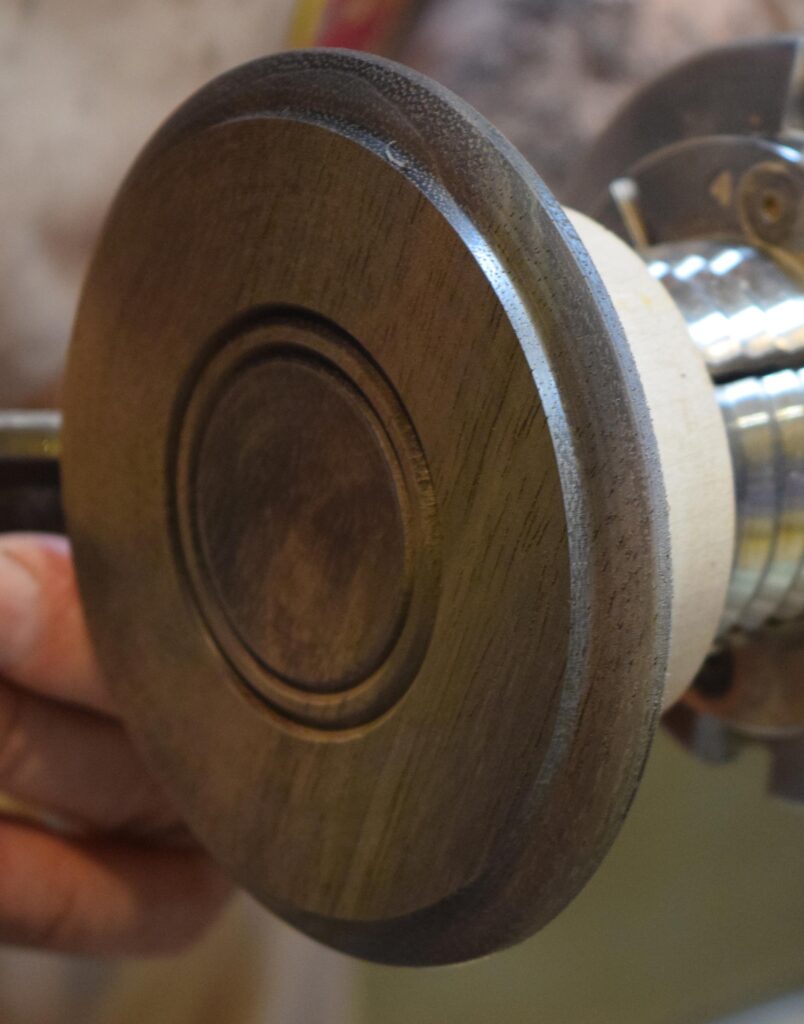
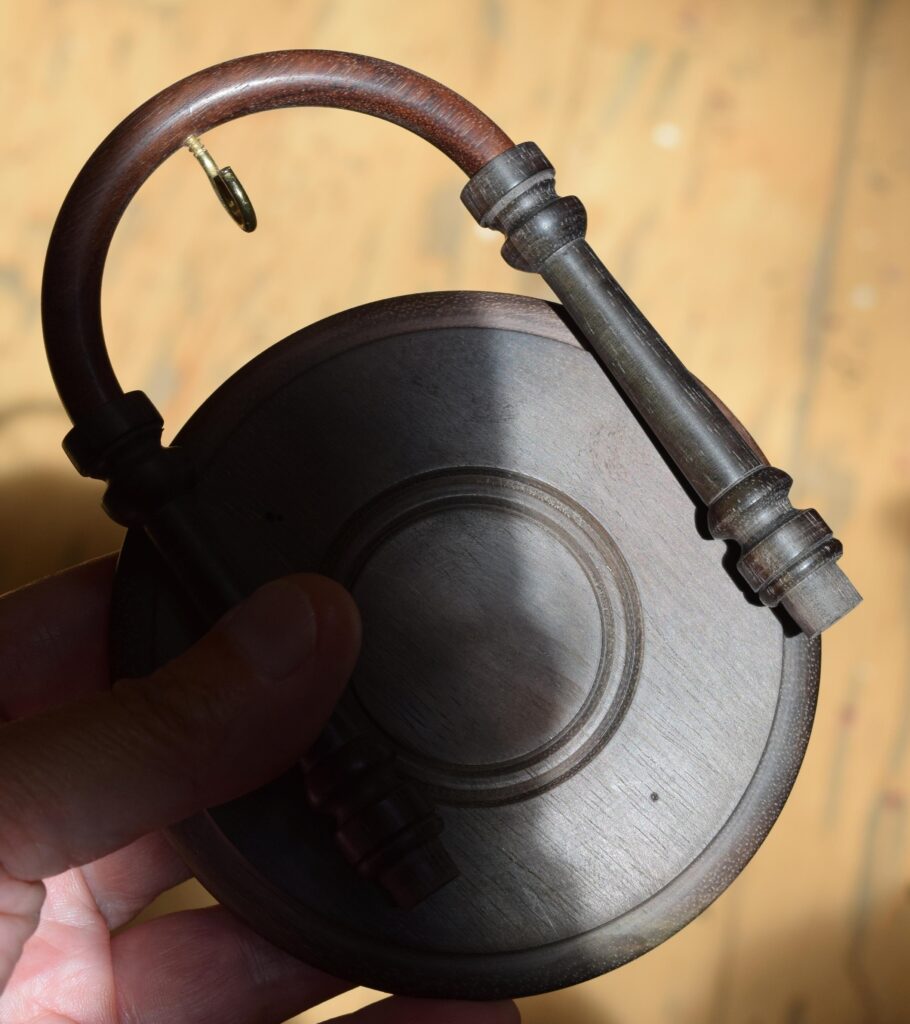
A 4” rosewood board is held on a small screw chuck. Round using a spindle gouge, and smooth the face. Ensure it is flat. Mark the diameter of the central bowl to hold a small watch key. Make a bead. Hollow the small bowl. Create a half bead on the edge with an ogee on the reverse side. Sand.
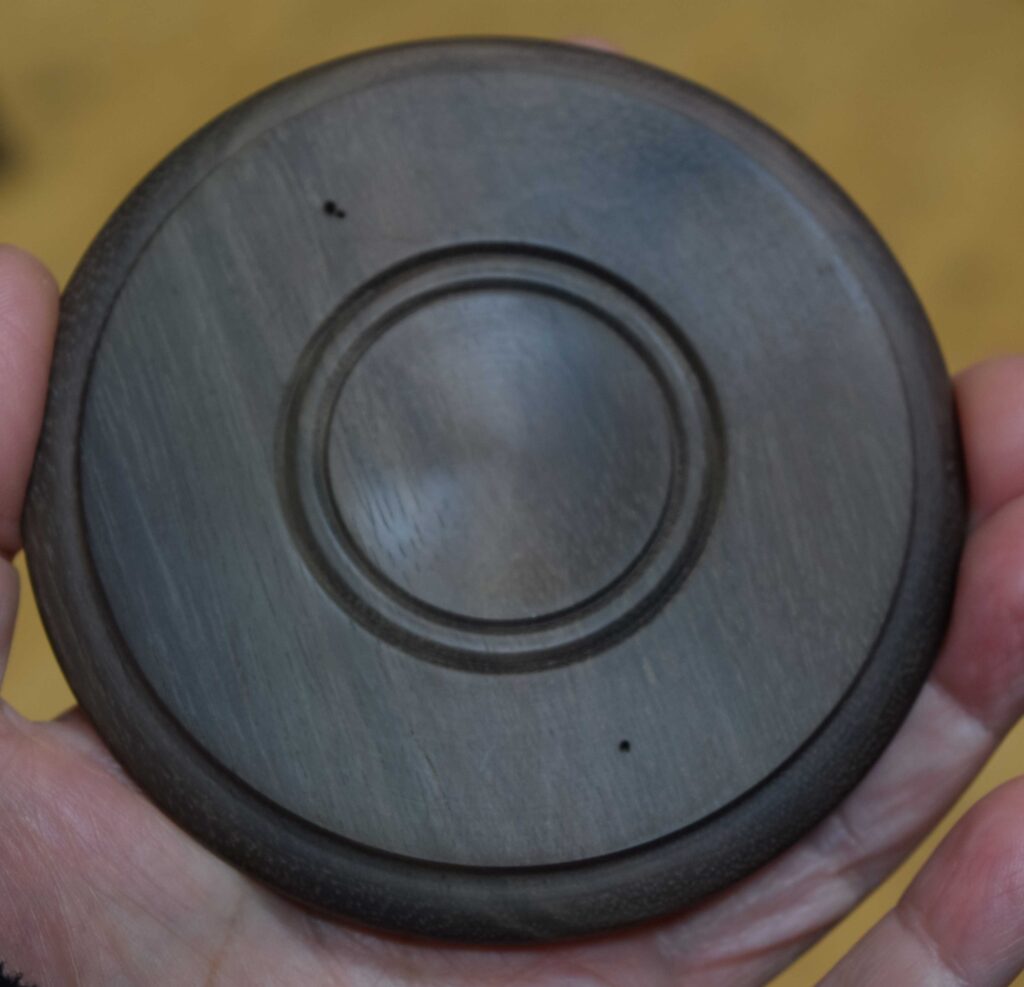
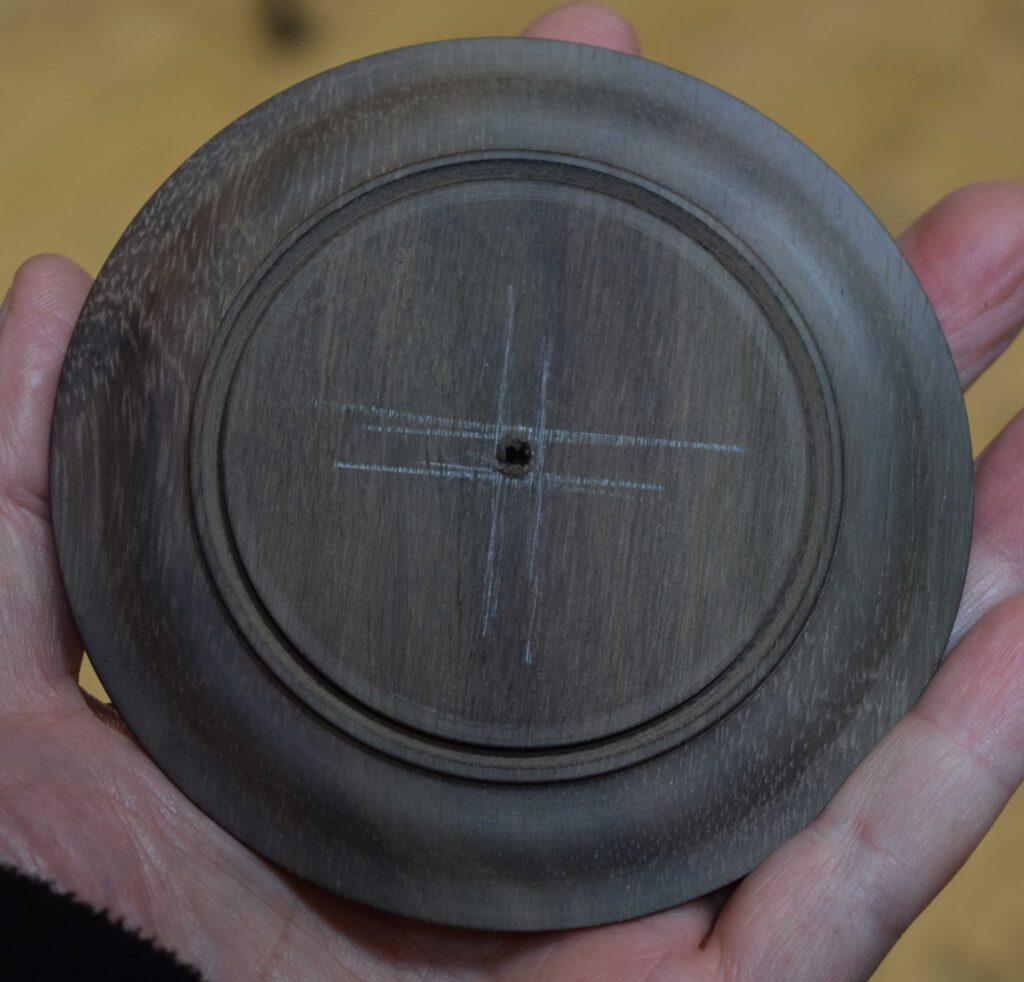
Mark the position of the two holes for the handles. Drill 10mm holes on a drill press.

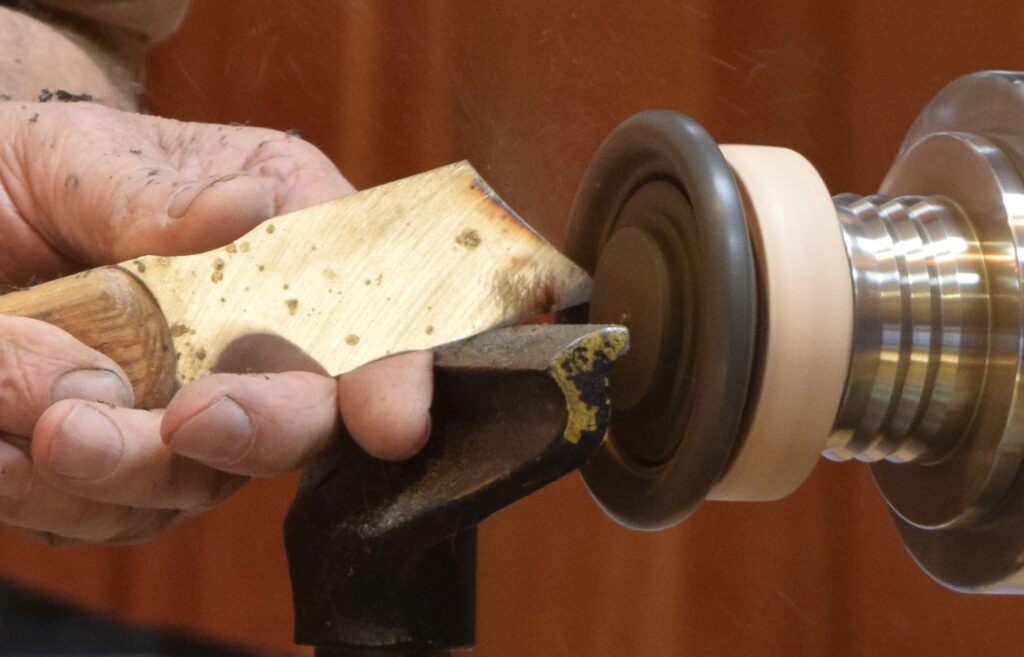
Next make the handle. This is done by turning a donut cut it in half. Round a a small board held on a screw chuck, clean the face and back.
Cut a recess halfway deep. Turn the donut shape to the diameter of your jam chuck. Sand. Part off at an angle (important otherwise the ring will come off).
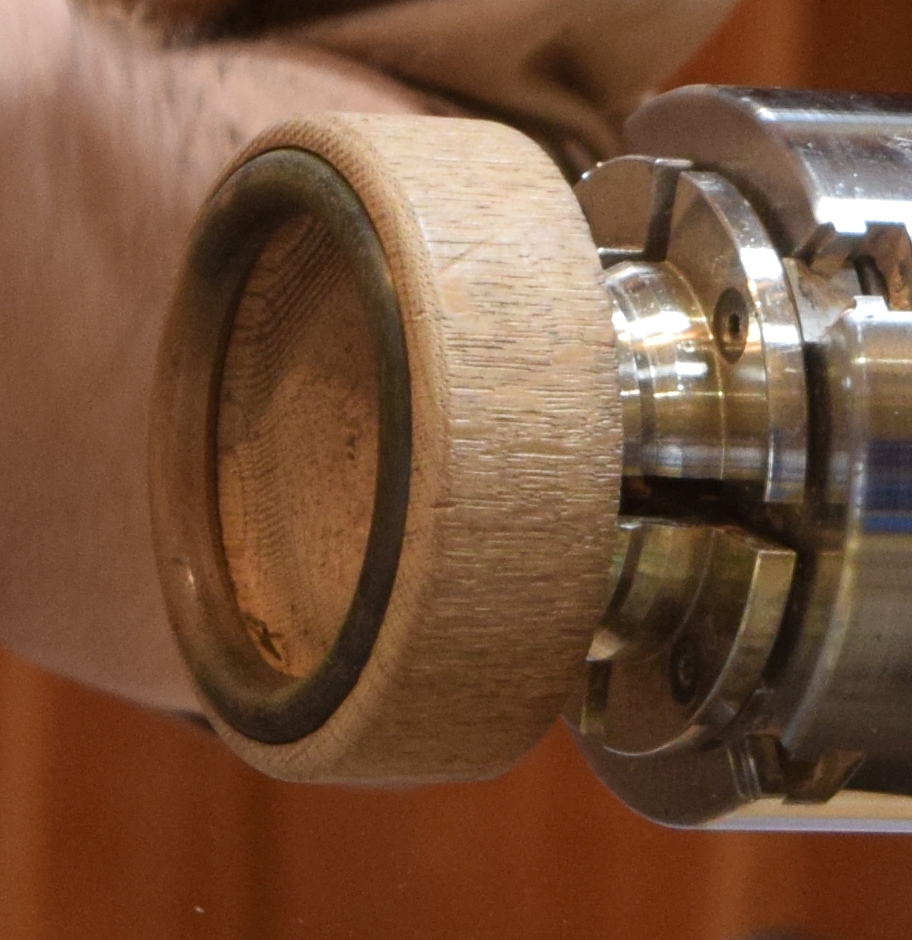
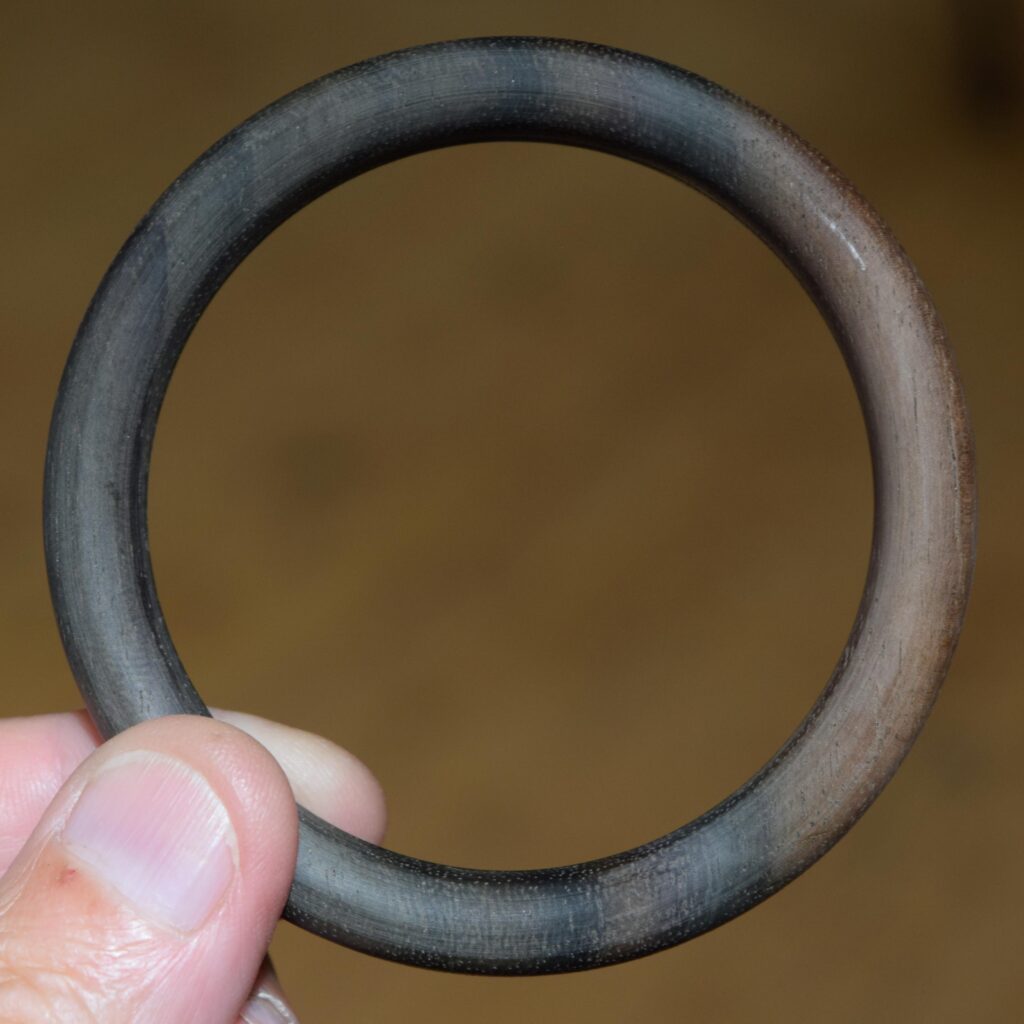
Hold in a jam chuck and turn the remaining half of the donut.
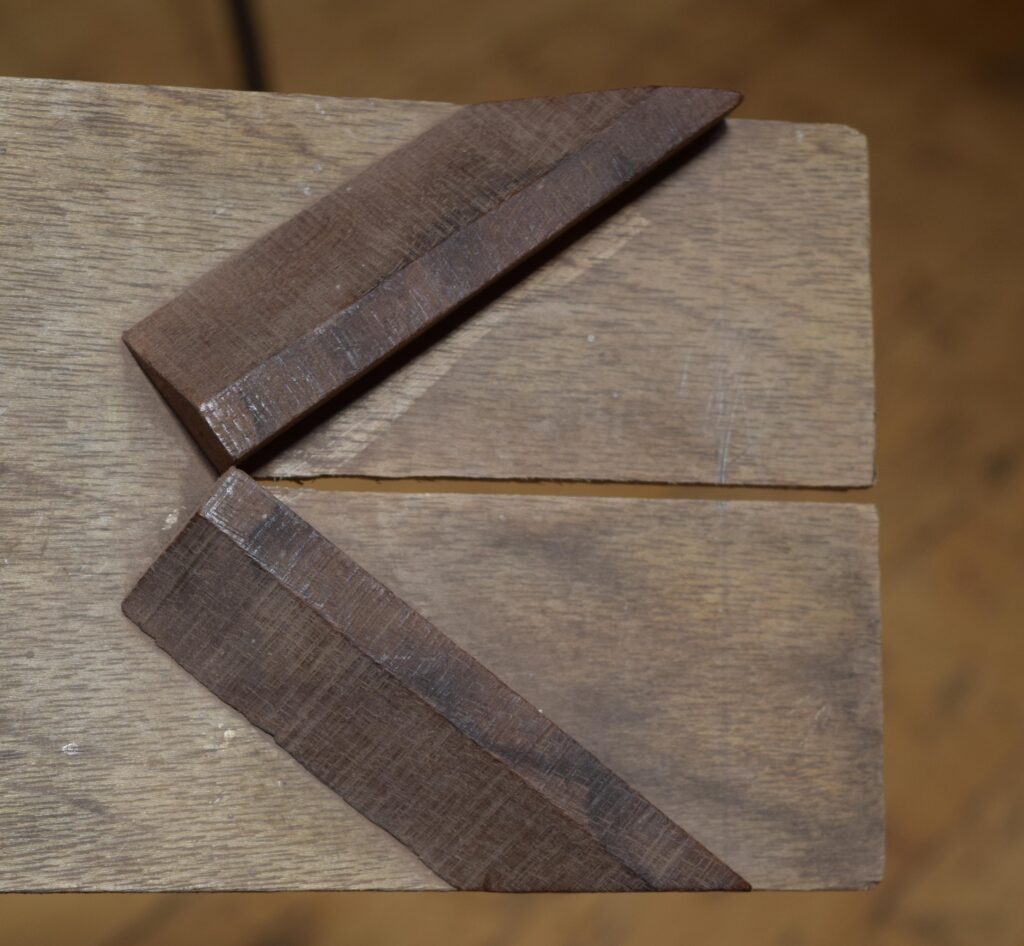
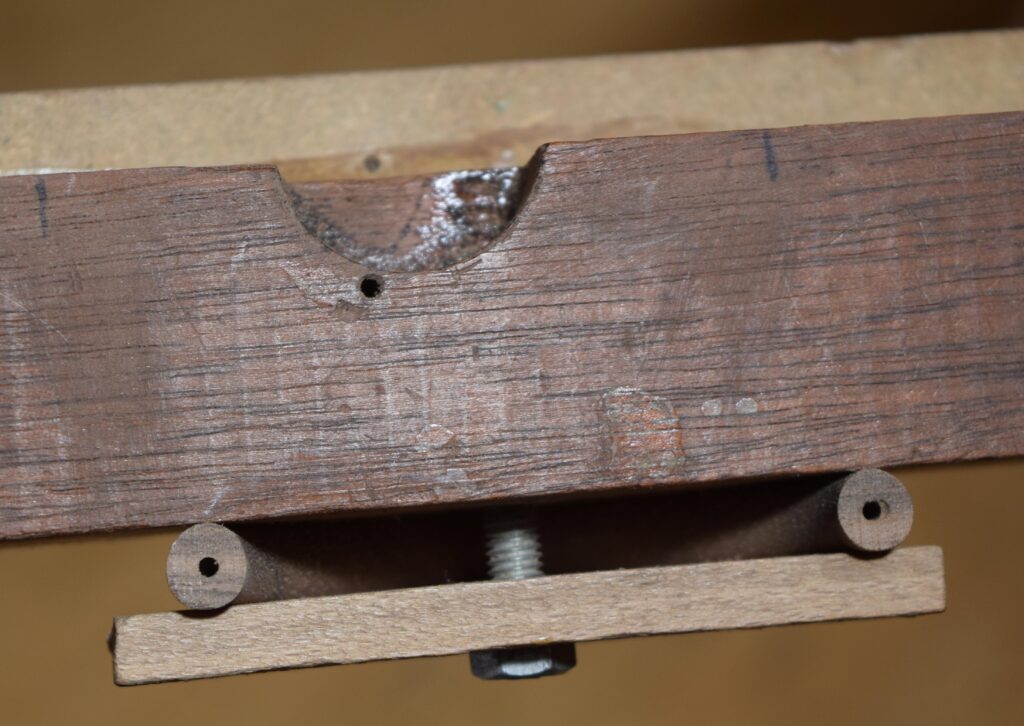
Use jigs to cut in half and to drill holes in the ends of the half donut.
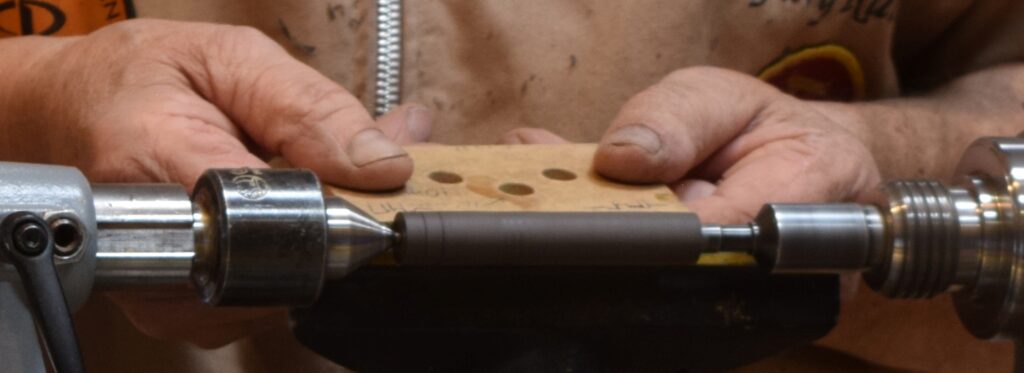
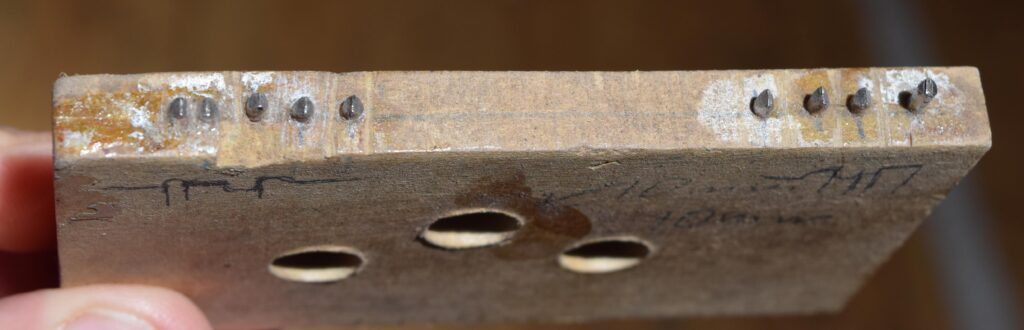
Next make two identical pillars. A template will help. Undercut at the tailstock end. Shape the pillar leaving a tenon at the headstock end. Sand. The tenon needs to be a loose fit. Make the second pillar.

Drill holes in the ends. Insert tiny screws with the heads cut off.
Pepper Mill
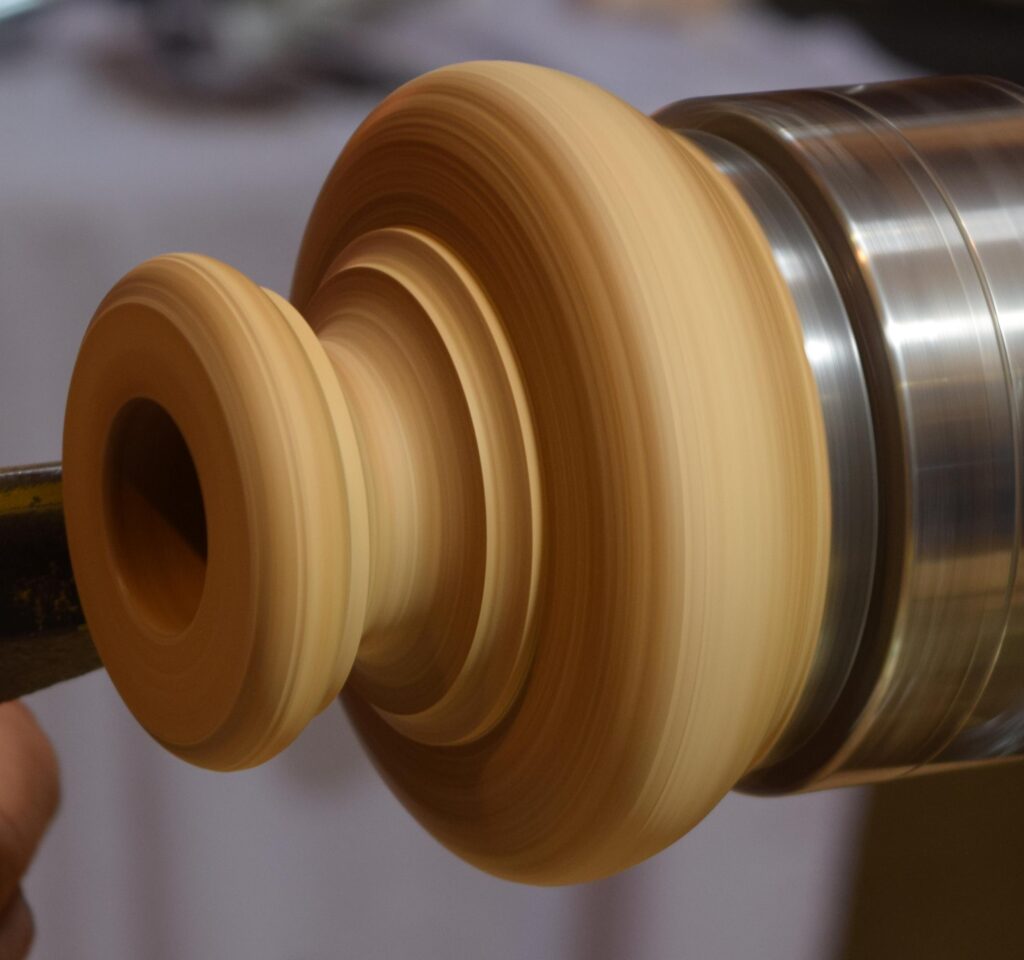
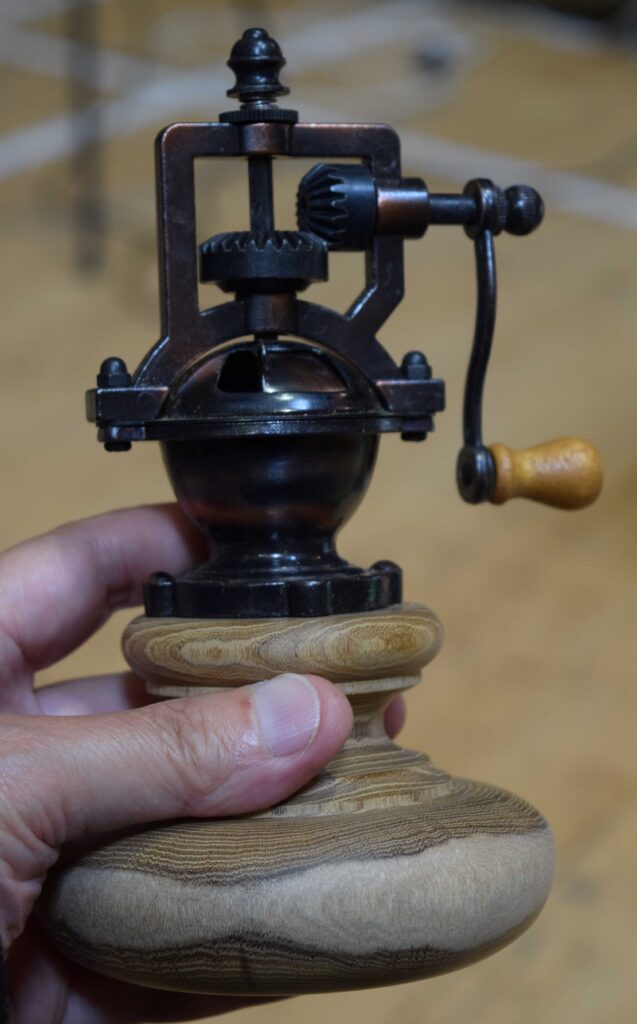
Gary used 4”x4”x2.75” Laburnum with a 25mm through hole held on pin/gripper jaws and supported by the tailstock. Mark 10-15mm bands with a pencil. Create depths of 60mm, 42mm, 62mm in diameter across from the tailstock.
Turn the 60mm into a bead, the 40mm into a cove and the 62mm into a bead; blend in. The headstock side is a large bead.
Remove the tailstock. Turn the edge inwards towards the hole. Sand.
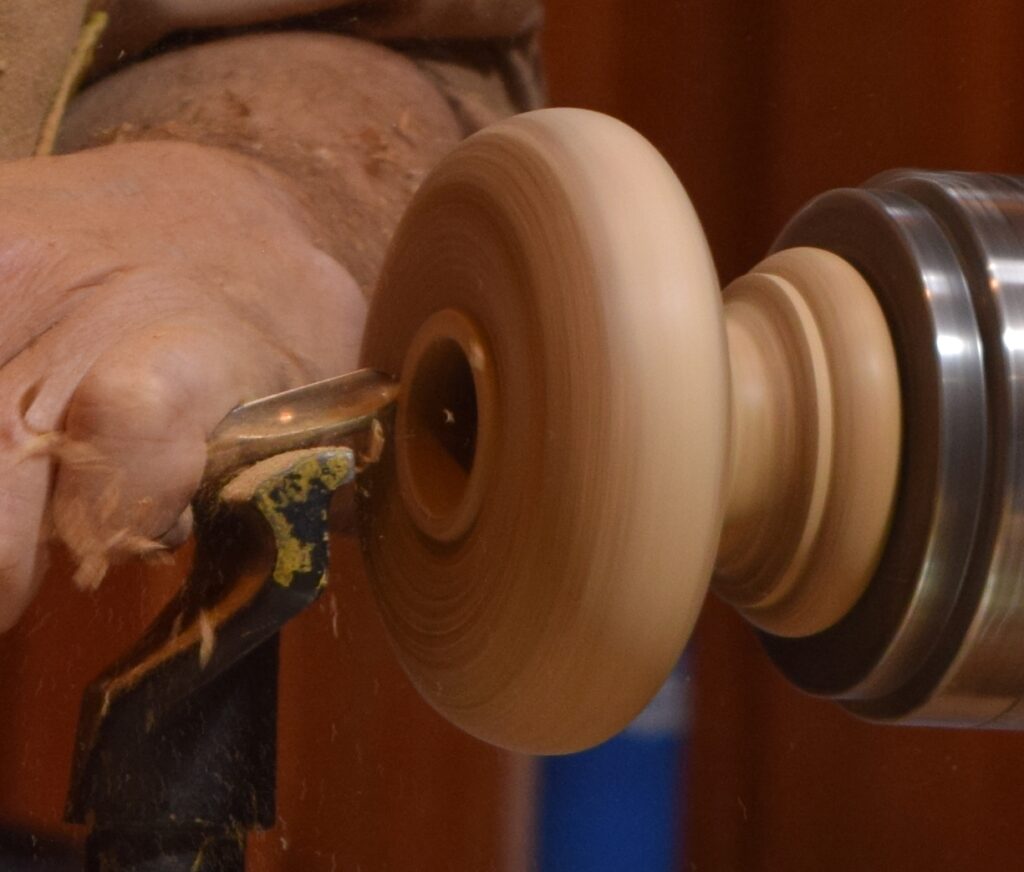
Reverse in the chuck. Refine the bottom. Sand.
Box with Corian Inlay

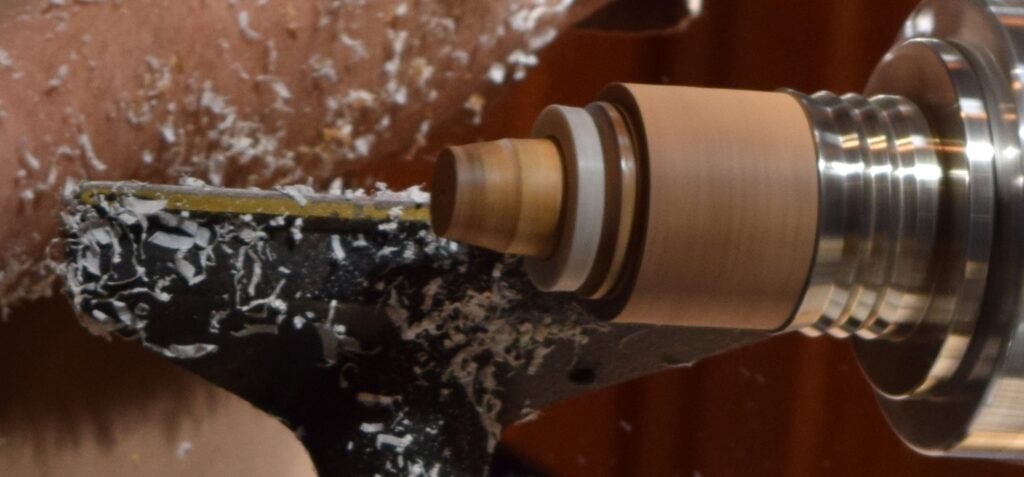
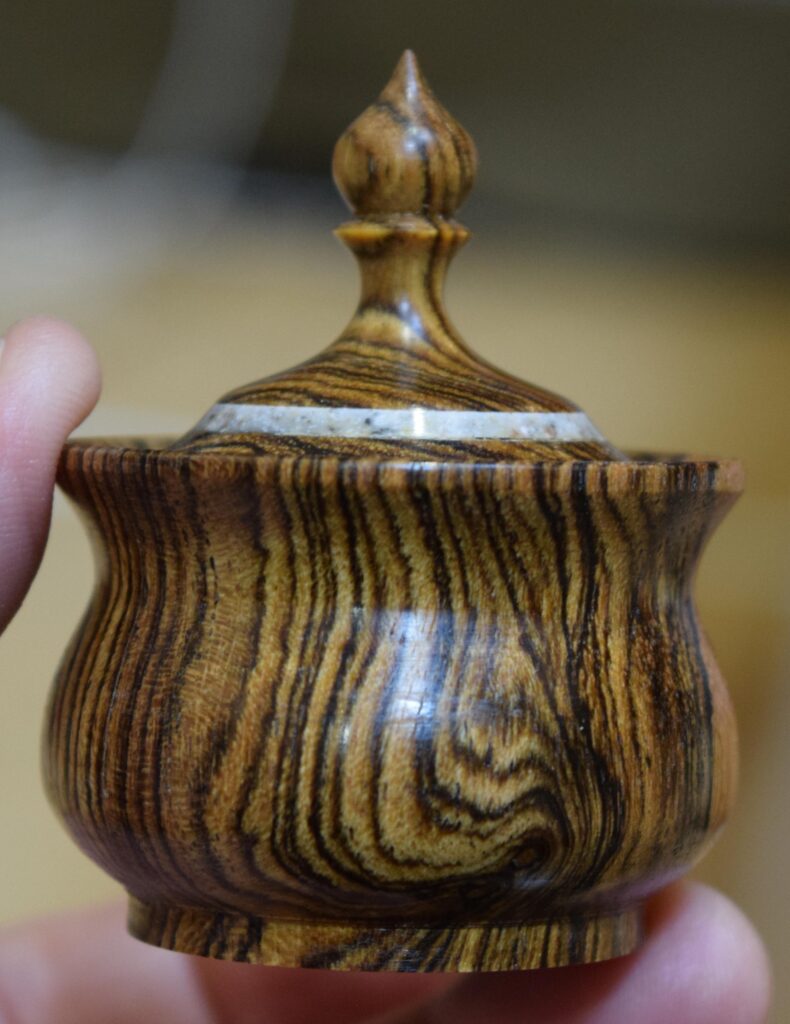
Gary used a 2”x2”x4” Bocote spindle blank with a tenon. Hold in a chuck.
You need a Corian square with a hole drilled through.
Create a tenon with an absolutely square shoulder. Apply superglue and attach the Corian.
Use the wings of a spindle gouge to gently round the Corian. Part off the unwanted Corian.
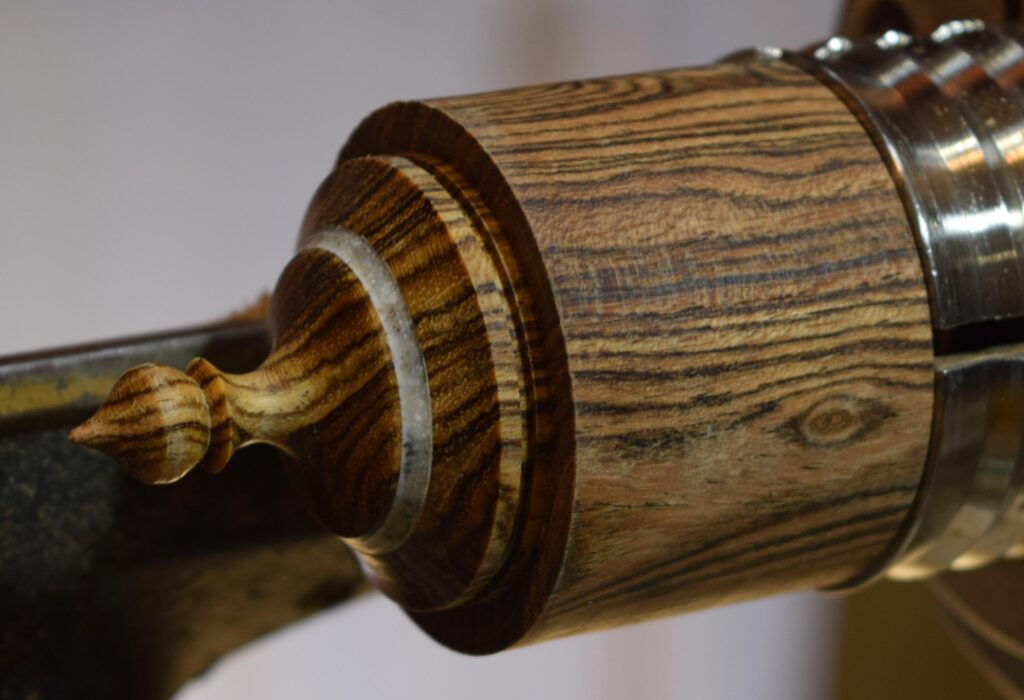
Shape the lid blending the Corian into the wood. Create a Finial. Sand and finish. Part off in a convex manner.
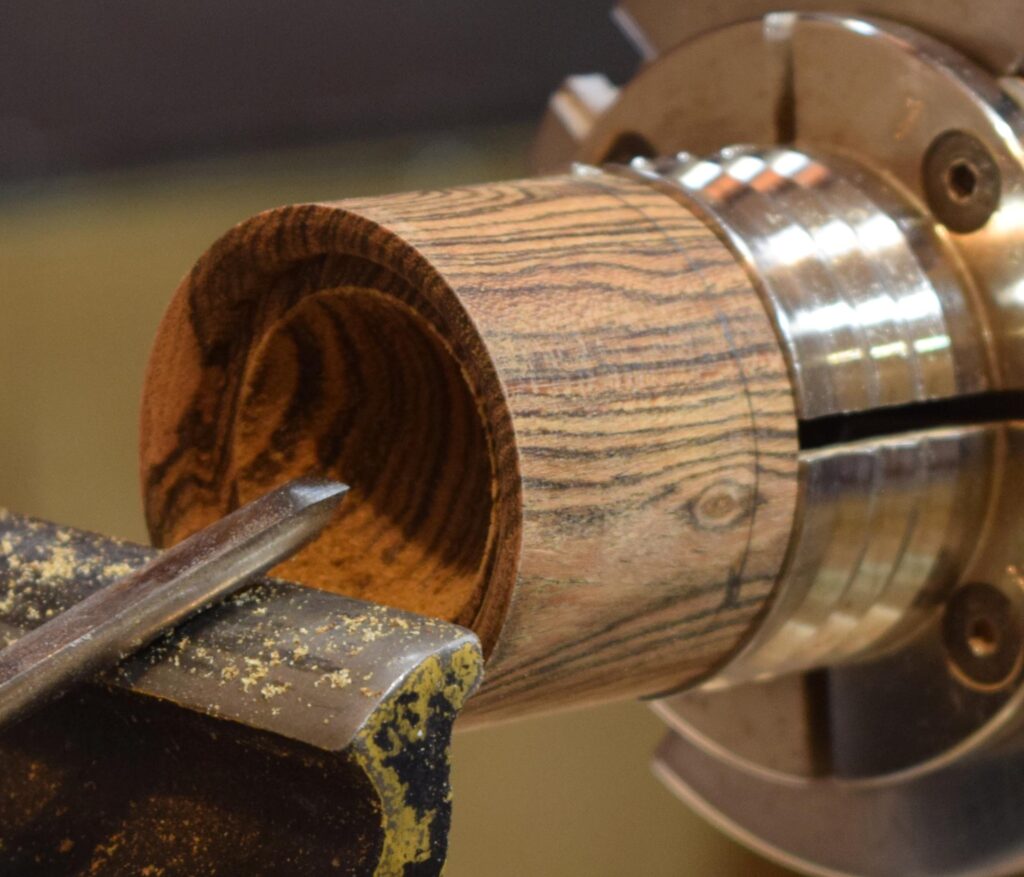

Hollow the base and create a step for the lid. Round over the inner edge. Test fit the lid.
Refine the inside using a box scraper.
Use a parting tool to create a recess next to the Jaws. Shape the box. Sand and finish.

Reverse turn on a jam chuck. Remove the tenon and add a few decorative grooves. Sand and finish.